The God of Good Fortune at the Table: Ebisu, the Seasons, and the Sacred Roots of Japanese Cuisine
In Japan, food has never been merely sustenance. For millennia, the act of preparing and sharing a meal has carried spiritual weight—a recognition that the ingredients on the table arrived through the generosity of forces larger than human effort alone. Of all the deities in the Shinto pantheon, none is more warmly present in the everyday life of Japanese people than Ebisu, the round-faced, fishing-rod-bearing god of fortune, abundance, and the sea.
Our restaurant takes its name—Tamaniwa Ebisu—in part from this enduring figure. To understand why requires a brief journey into the cultural and spiritual landscape that has quietly shaped Japanese cuisine from its earliest origins to the present day.
Who Is Ebisu?
Ebisu (恵比須 or 恵比寿) is one of the Seven Lucky Gods, the Shichifukujin, a beloved group of deities associated with happiness, prosperity, and good fortune. He is typically depicted as a cheerful, heavyset figure in traditional court clothing, holding a fishing rod in one hand and a large red sea bream—tai—under his arm. His expression is invariably one of contented joy, and this warmth is central to his appeal across centuries of Japanese folk religion.
Unlike many Shinto deities associated with distant, celestial power, Ebisu is emphatically a deity of the everyday. He is the patron of fishermen, merchants, and working people—those who rise before dawn to bring food to market, who negotiate fair prices, and who depend on the sea's generosity for their livelihood. In coastal towns throughout Japan, small shrines to Ebisu can be found near fishing docks, inside market stalls, and at the entrances to restaurants, where his image is believed to invite abundance and protect the enterprise.
The sea bream he carries is itself significant. Tai is considered the most auspicious of fish in Japanese culture—its name shares a phonetic echo with medetai, meaning joyful or celebratory. Whole tai is served at weddings, New Year's feasts, and milestone celebrations. When a Japanese chef presents a beautifully prepared piece of sea bream, they are, in a sense, invoking something very old.
Seasonal Festivals and the Rhythm of Blessing
Japanese food culture is organized around the concept of shun—the peak season of any given ingredient—but this attentiveness to time is not purely practical. It is also devotional. The Japanese calendar is punctuated by festivals and observances that mark the turning of seasons and offer gratitude for what the earth and sea have provided.
Setsubun (early February) signals the transition from winter to spring. Families scatter roasted soybeans to drive away misfortune and welcome good luck, a ritual that carries echoes of agricultural prayer. In many homes and restaurants, ehomaki—a special uncut sushi roll—is consumed in silence while facing the year's auspicious compass direction. The act of eating this roll whole, without speaking, is understood as a way of drawing good fortune inward without breaking the spell.
Obon (mid-August) is a Buddhist observance honoring ancestral spirits, during which special foods are prepared as offerings before being shared among the living. The meal is not simply dinner; it is a bridge between generations, a way of maintaining relationship with those who came before.
Kannazuki, the tenth month of the lunar calendar, is sometimes called the Month Without Gods—a period when Shinto deities are said to gather at the Grand Shrine of Izumo, leaving local shrines temporarily unattended. Ebisu, however, is notably exempt from this gathering. Because he is somewhat hard of hearing in certain folk traditions, he does not receive the summons. This endearing detail has made him a figure of particular affection; he remains behind, faithfully present, when others have departed.
For diners at establishments that take these traditions seriously, the seasonal menu is never arbitrary. It reflects a genuine attentiveness to what each moment of the year offers and what gratitude is owed for it.
Blessing Rituals in the Japanese Restaurant
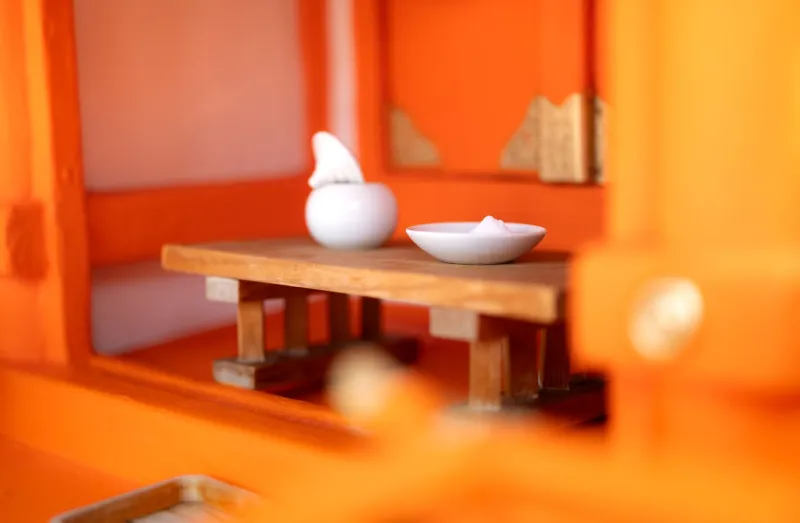
Many traditional Japanese restaurants—particularly those with long histories or strong regional identities—maintain small household shrines called kamidana (神棚), literally god shelves. These modest wooden structures, typically mounted high on a wall, hold offerings of rice, salt, water, and sake, refreshed regularly as a gesture of ongoing gratitude and respect. A sprig of sacred sakaki greenery and a small oil lamp complete the arrangement.
For the uninitiated American diner, spotting a kamidana in a restaurant may provoke curiosity. It is not a decorative element or an exotic prop. It is a sincere expression of the belief that a successful kitchen operates in partnership with forces beyond human skill alone—that the fish arrived safely, that the harvest was generous, that the hands doing the work were guided well. The offering of salt, in particular, carries ancient resonance: salt purifies, preserves, and honors.
Ebisu's image frequently appears within or near these shrines in establishments connected to the sea's bounty. At Tamaniwa Ebisu, this presence is not incidental. It reflects our understanding that authentic Japanese dining is inseparable from the cultural and spiritual context that gave it shape.
How These Traditions Enhance the Dining Experience
For American diners approaching Japanese cuisine primarily through its flavors and techniques, learning even a small amount of this cultural background can be genuinely transformative. The fatty richness of winter toro is not simply a textural pleasure—it is the sea's cold-season gift, something that could not be offered in July. The bitter edge of spring greens is not a flaw to be corrected but a signal of renewal, a taste that has been anticipated through months of root vegetables and preserved foods.
When a Japanese chef explains that a particular dish is prepared in honor of a seasonal observance, or that an ingredient appears on the menu only during a brief window each year, they are extending an invitation into a much larger story. Accepting that invitation—arriving curious, asking questions, sitting with the experience rather than simply consuming it—is itself a form of respect.
The concept of itadakimasu, spoken before a meal, captures this beautifully. Often translated as I humbly receive, the phrase acknowledges the lives of the ingredients, the labor of those who grew and caught and prepared them, and the invisible chain of generosity that placed this food on the table. It is a small word carrying enormous weight.
Ebisu as a Living Presence
In the Nada district of Kobe, one of Japan's most celebrated sake-brewing regions, the largest Ebisu shrine in the country hosts the Toka Ebisu festival each January—a three-day celebration that draws over a million visitors who come to receive bamboo branches adorned with auspicious decorations, symbolizing the harvest of fortune in the year ahead. Across Japan, similar festivals take place in coastal towns, market districts, and city neighborhoods where Ebisu's patronage is felt most keenly.
This is not a relic. These are living traditions, practiced with genuine feeling by communities that understand their work to be part of something continuous and meaningful. When a Japanese restaurant in the United States maintains even a thread of this awareness—in its sourcing, its seasonal attentiveness, its quiet rituals of preparation and gratitude—it carries that continuity across the Pacific.
At Tamaniwa Ebisu, we are honored to hold that thread. Every ingredient selected with care for its season, every dish prepared with respect for its origins, every meal shared in the spirit of omotenashi—genuine, unhurried hospitality—is our way of keeping Ebisu's legacy present at the table.
We invite you to experience it for yourself.