Surrendering to the Chef: A First-Timer's Complete Guide to Omakase Dining
There is a particular kind of trust involved in saying, simply, I leave it to you. In Japanese, that phrase is omakase (お任せ), and for centuries it has defined one of the most intimate and carefully considered dining traditions in the world. For many Americans encountering this format for the first time, the prospect of relinquishing menu control—often at a price point that reflects the chef's years of mastery—can feel equal parts thrilling and nerve-wracking.
At Tamaniwa Ebisu, we believe that understanding the philosophy behind omakase dissolves that anxiety entirely. What remains is pure appreciation: for the craft, for the season, and for the quiet conversation between chef and guest that unfolds across a dozen or more precisely composed courses.
What Omakase Actually Means
The word itself derives from the verb makaseru, meaning to entrust or to leave something in another's capable hands. When a diner says omakase, they are not simply ordering a tasting menu in the Western sense. They are entering into a relationship—a silent agreement that the chef's judgment, shaped by decades of training and an acute awareness of what is finest on any given day, will guide every decision from first bite to last.
This distinction matters. A fixed tasting menu at a European-style restaurant is predetermined, often printed weeks in advance. An omakase meal, by contrast, is fluid. A chef may adjust a course on the spot because a particular piece of fish arrived that morning in exceptional condition, or because a guest's subtle reaction to one preparation suggests a different direction for the next. The meal breathes and responds in real time.
The Setting: Counter Culture
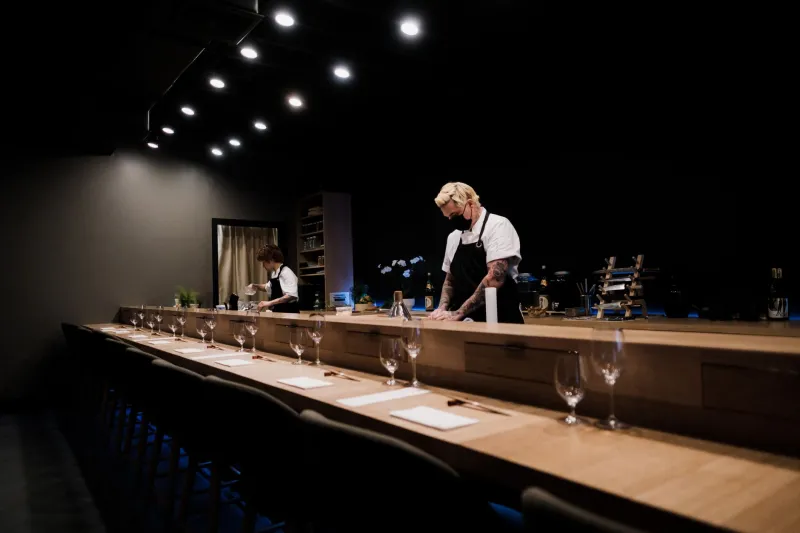
Authentic omakase is almost always experienced at a counter—a low, clean expanse of hinoki cypress wood or polished stone that places the diner within arm's reach of the chef's workspace. This proximity is intentional. You are not an observer peering into a distant kitchen; you are a participant in a quiet theater of technique.
For American diners accustomed to the comfortable remove of a dining room table, this closeness can initially feel unfamiliar. Lean into it. Watch the chef's hands. Notice the economy of motion, the deliberate placement of each ingredient. The counter is not merely a practical surface—it is the stage upon which the chef's years of discipline become visible.
Most omakase counters seat between six and twelve guests, ensuring that each person receives the chef's genuine attention. Reservations are essential, often required weeks or even months in advance at sought-after establishments.
Etiquette Essentials: What to Do and What to Avoid
Omakase carries its own quiet code of conduct, and while no reputable chef will scold a well-meaning first-timer, observing these conventions deepens the experience considerably.
Arrive on time. Because all guests at a counter typically progress through courses together, a late arrival disrupts the choreography of the meal and is considered a significant discourtesy.
Communicate dietary restrictions in advance. Omakase chefs are skilled at accommodation, but they require advance notice—ideally at the time of reservation—to source appropriate alternatives. Announcing an allergy mid-service places an unfair burden on the kitchen and may compromise the integrity of your meal.
Eat each piece as it is presented. Sushi, in particular, is composed with the understanding that it will be consumed immediately. The rice is seasoned and pressed to a specific temperature; the fish is placed at the precise moment its texture is optimal. Allowing a piece to sit diminishes the chef's intention.
Minimize fragrance. Heavy perfume or cologne interferes with the delicate aromatic qualities of the ingredients. Many omakase establishments in Japan—and a growing number in the United States—quietly request that guests arrive scent-neutral.
Engage, but do not dominate. The counter invites gentle conversation. A thoughtful question about an unfamiliar ingredient or a preparation technique is welcomed. However, loud socializing or extended phone use disrupts the contemplative atmosphere that other guests have sought out.
The Role of Seasonality
Perhaps no principle is more central to omakase than shun (旬)—the concept of peak seasonal ripeness. A skilled chef does not simply source quality ingredients; they source ingredients at the precise moment they are most expressive. Spring brings the delicate bitterness of bamboo shoots and the first appearance of young sea bream. Summer yields glistening uni from Hokkaido and the bright acidity of young ginger. Autumn ushers in fatty Pacific saury and the earthiness of matsutake mushrooms. Winter offers the prized richness of toro and the clean sweetness of snow crab.
For American diners, this seasonal attentiveness may feel more familiar than expected. The farm-to-table movement that has shaped U.S. restaurant culture over the past two decades shares a philosophical kinship with shun. The difference lies in the degree of precision and the centuries of accumulated knowledge informing each selection.
At Tamaniwa Ebisu, our menu reflects these seasonal rhythms with deliberate care. When you sit at our counter, each course is an expression of what the current moment in the natural calendar offers at its finest.
Chef-Guest Interaction: The Unspoken Dialogue
One of the most distinctive aspects of omakase is the ongoing, largely nonverbal exchange between chef and guest. An experienced itamae (board master) reads the room with remarkable sensitivity. The pace at which a guest eats, the expression that crosses their face after a first bite, the way they hold their chopsticks—all of these carry information that a skilled chef absorbs and responds to.
Guests, in turn, can participate actively by expressing genuine reactions. A simple nod of appreciation, a quiet oishii (delicious), or even a look of curious inquiry communicates engagement and respect. You need not be fluent in Japanese to participate meaningfully in this exchange. Sincerity translates across every language.
Finding an Authentic Experience in the United States
Omakase has grown considerably in American dining culture over the past decade, with notable counters now operating in cities including New York, Los Angeles, San Francisco, Chicago, and Miami. Quality, however, varies widely. When evaluating an omakase establishment, consider the following:
- Chef background and training. Authentic omakase is typically guided by a chef with formal training in Japan or direct mentorship under a Japanese master.
- Ingredient sourcing. Reputable establishments can speak specifically about where their fish is sourced, how frequently it is delivered, and whether they work with trusted Japanese suppliers or domestic purveyors of comparable quality.
- Counter format. A true omakase experience centers on the counter. Be cautious of restaurants that use the term loosely to describe a fixed menu served at conventional tables.
- Reservation structure. Single-seating or limited-seating models typically indicate a more rigorous commitment to the format.
Approaching the Meal with the Right Spirit
Ultimately, omakase asks something of the diner that few dining experiences do: genuine openness. The willingness to receive, to be surprised, to trust in expertise rather than assert personal preference. For Americans conditioned to abundant choice and customization, this surrender can feel counterintuitive.
But within that surrender lies the heart of Japanese hospitality—omotenashi, the art of anticipating a guest's needs before they are voiced and exceeding them without fanfare. When a chef places a piece of fish before you that you might never have ordered for yourself, and it becomes the most extraordinary thing you have tasted in years, you understand precisely why the tradition has endured for generations.
At Tamaniwa Ebisu, every seat at our counter is an invitation to that understanding. We look forward to earning your trust, one carefully composed course at a time.