The Fifth Taste Americans Missed for Decades: Understanding Umami at the Japanese Table
For most of the twentieth century, American food culture operated on four tastes: sweet, sour, salty, and bitter. The framework felt complete. It appeared in school textbooks, culinary curricula, and the popular imagination as a settled map of how flavor works. Then came a growing body of scientific evidence — and a surge of cultural curiosity — that forced a revision. There was a fifth taste, and it had been sitting at the Japanese table all along.
Umami. The word itself resists easy translation. Coined in 1908 by Japanese chemist Kikunae Ikeda, it derives from umai (delicious) and mi (taste). Ikeda isolated the compound responsible — glutamate — from kombu seaweed and identified it as distinct from the four recognized tastes. Japan accepted the finding. Much of the Western world did not, at least not for a very long time.
Why American Palates Took So Long to Catch Up
The delay was not a matter of American taste buds being physiologically different. Human tongues carry receptors for glutamate regardless of nationality. The gap was linguistic, cultural, and conceptual.
American food culture has historically described flavor in broad, emotionally loaded terms: rich, hearty, satisfying, deep. These words gesture toward umami without naming it. When a bowl of beef stew tastes remarkably complete, or a slice of aged cheddar lingers on the palate in a way that feels almost addictive, that sensation has a chemical explanation — glutamate, inosinate, or guanylate triggering specific receptors. But without a word for it, without a cultural framework that treated it as a distinct and nameable thing, American diners simply filed the experience under "delicious" and moved on.
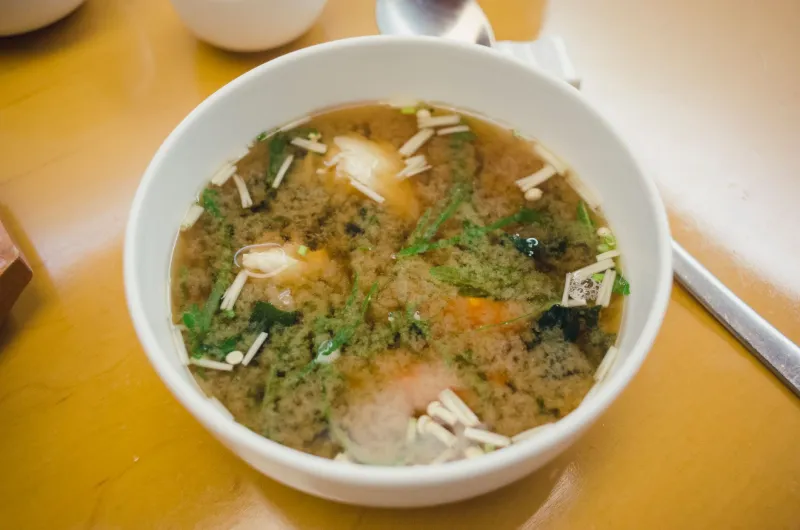
Japanese culinary tradition, by contrast, built an entire architecture around umami's recognition and cultivation. The concept of dashi — a foundational broth made from kombu and bonito flakes — is essentially a delivery system for pure umami. It is not a background flavor. It is the point. Every bowl of miso soup, every carefully simmered dish, every piece of properly seasoned rice draws from this tradition of treating savory depth as something to be deliberately constructed and appreciated.
The Moment Umami Entered the American Mainstream
The shift began slowly and then accelerated with unusual speed. Food scientists in the early 2000s confirmed the existence of glutamate receptors on the human tongue, lending formal biological credibility to what Japanese researchers had argued for nearly a century. Food writers began using the word in mainstream publications. Restaurant menus started annotating dishes with umami-forward descriptors. By the mid-2010s, the term had migrated from specialty culinary circles into grocery store marketing copy and cooking competition television.
This mainstreaming was not without its awkward moments. "Umami burgers" appeared across American cities. Bottled umami pastes lined supermarket shelves. The word became, briefly, something of a culinary buzzword — applied so liberally that it risked losing its specificity. But beneath the trend, something genuinely important was happening: American diners were developing a new category of perception. They were learning to isolate and name a taste they had always experienced but never consciously identified.
For Japanese cuisine, this cultural moment represented long-overdue recognition. The foods that had always anchored authentic Japanese cooking — miso, soy sauce, dried mushrooms, aged fish, fermented condiments, seaweed — are among the most umami-rich substances on earth. American diners who had enjoyed Japanese food for years were, in many cases, discovering that what they loved about it had a specific name and a specific source.
How Umami Actually Feels on the Palate
Describing a taste is notoriously difficult, and umami is no exception. It does not announce itself the way sweetness or acidity does. It is more of a quality than a flavor — a roundness, a persistence, a sensation that seems to coat the entire mouth and encourage continued eating. Umami makes food feel complete in a way that is difficult to articulate but immediately recognizable once you have been introduced to it properly.
At the Japanese table, umami rarely arrives in isolation. It is layered. A bowl of ramen builds glutamate through the broth, inosinate through the pork or chicken, and often guanylate through dried mushrooms — three distinct umami compounds that amplify one another synergistically. The result is a depth of flavor that seems disproportionate to the simplicity of the ingredients. This is not magic. It is chemistry applied through centuries of culinary refinement.
When dining at an authentic Japanese establishment, paying attention to this layering is one of the most productive habits a guest can develop. Before reaching for additional soy sauce or seasoning, pause and consider whether the dish already contains a savory depth that simply needs time to register. Umami often reveals itself on the finish — the sensation that lingers after the initial bite has passed.
Training Your Palate: Practical Guidance for the Curious Diner
Developing sensitivity to umami is less about acquiring a new ability and more about directing existing perception. Several straightforward approaches help American diners sharpen this awareness.
Start with dashi. If an authentic Japanese restaurant offers a simple bowl of clear soup or miso soup, begin there. Dashi is umami in its most elemental form — stripped of distraction, present and unadorned. Tasting it with attention teaches the palate what it is looking for in every subsequent dish.
Compare before and after seasoning. When a dish arrives, taste it immediately before adding anything. Note the baseline savory quality. This is the chef's intended umami profile. Adjusting it before tasting it fully is, in a sense, editing a sentence before reading it.
Notice the finish, not just the front. Sweet and sour flavors tend to register immediately. Umami lingers. Train yourself to evaluate the aftertaste — the sensation thirty seconds after swallowing — and you will begin to detect umami's signature persistence.
Seek out fermented and aged components. Miso, aged soy sauce, fish-based condiments, and dried preparations are reliable sources. When a dish features these elements prominently, umami is likely central to its design.
A Taste That Was Always There
Perhaps the most striking thing about America's umami awakening is how long the taste was present before it was recognized. Parmesan cheese, Worcestershire sauce, sun-dried tomatoes, anchovies — all deeply embedded in American cooking, all extraordinarily high in glutamate. The fifth taste was never absent from the American table. It simply lacked a name and, by extension, the attention that naming allows.
Japanese cuisine offers American diners not just exceptional food, but a more complete vocabulary for experiencing it. At Tamaniwa Ebisu, the dishes served are built on the same foundational philosophy that Ikeda articulated more than a century ago: that savory depth is a distinct dimension of flavor, worthy of cultivation and worthy of recognition. Arriving at the table ready to taste it — not just enjoy it — is one of the most meaningful ways a guest can honor what the kitchen has prepared.