Sharper Thinking: How Japanese Knife Philosophy Can Elevate the American Home Kitchen
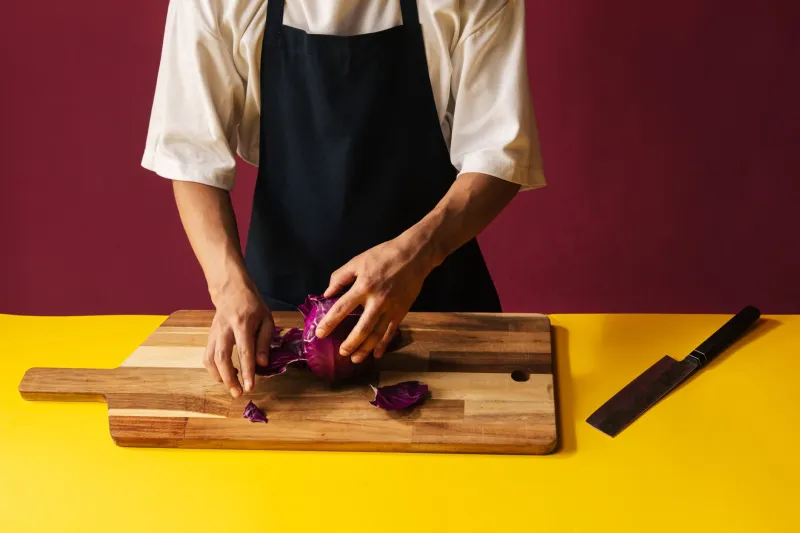
Long before a dish reaches the table, its character is determined by how its ingredients are handled. In Japanese culinary tradition, the knife is not merely a tool but a philosophical instrument—and understanding even its most foundational principles can profoundly change the way American home cooks approach their craft.
At Tamaniwa Ebisu, we believe that authentic Japanese dining extends beyond the restaurant. It lives in the attention brought to every ingredient, every surface, every deliberate motion. The blade, in this sense, is where intention first becomes visible.
More Than Metal: The Cultural Weight of the Japanese Knife
In Japan, a knife is treated with a reverence that may initially seem disproportionate to Western eyes. Professional chefs often own blades that have been crafted by a single artisan over many days, and they carry them in personal rolls rather than sharing them with colleagues. Upon retirement, some chefs participate in hocho-shiki, a formal knife memorial ceremony in which old blades are honored before being laid to rest.
This is not sentimentality. It reflects a deeply held belief that the quality of a cut directly influences the quality of the dish—not only in texture and presentation, but in how the ingredient releases its flavor. A clean, precise cut severs cellular walls without crushing them, preserving the integrity of the food. A rough or imprecise cut, by contrast, bruises the ingredient, releasing moisture prematurely and dulling its character.
For the American home cook, this philosophy offers a practical reorientation: before asking what to cook, consider how you are cutting.
You Do Not Need an Expensive Knife—You Need an Informed Hand
One of the most persistent misconceptions about Japanese knife craft is that it requires significant investment in specialized equipment. While a well-made gyuto (the Japanese chef's knife) or a nakiri (the rectangular vegetable blade) will certainly reward dedicated cooks, the philosophy behind their use is entirely transferable to whatever knife is already in your kitchen drawer.
The essential principle is this: let the blade do the work. Japanese cutting technique relies on drawing the knife through the ingredient in a single, fluid motion rather than pressing or rocking through it. This forward-and-downward stroke, sometimes called a push cut, maintains contact between the blade's full length and the food, producing a cleaner result with less physical effort.
Before attempting any technique, ensure your knife is sharpened. A dull blade is not merely inefficient—it is dangerous, requiring excessive force that leads to slipping and imprecision. A simple whetstone, available at most kitchen supply stores for under thirty dollars, is sufficient for maintaining a serviceable edge at home.
Three Essential Cuts Worth Learning
Japanese cuisine employs a rich vocabulary of knife cuts, each suited to a specific purpose. Three of them are particularly accessible for home cooks and immediately applicable to everyday cooking.
Sengiri (Julienne) Perhaps the most recognizable of the three, sengiri produces long, thin matchstick strips from vegetables such as daikon, cucumber, or carrot. The technique begins with squaring off the vegetable into a uniform block, then slicing it into thin planks before stacking those planks and cutting lengthwise into fine strips. The goal is consistency—each strip should be identical in width, ensuring even seasoning and a pleasant, uniform texture in the finished dish. In practice, this cut is invaluable for salads, stir-fries, and garnishes.
Nanamegiri (Bias Cut) The bias cut involves slicing ingredients on a diagonal, typically at a forty-five-degree angle. This technique is commonly applied to scallions, asparagus, and other elongated vegetables. By cutting on the diagonal rather than straight across, the cook exposes more surface area on each piece, which serves two purposes: it accelerates cooking time, and it allows sauces and seasonings to penetrate more readily. The result is a piece that is both visually appealing and more flavorful than its straight-cut counterpart.
Katsuramuki (Rotary Peeling) This is the most demanding of the three, and perhaps the most meditative. Katsuramuki involves rotating a cylindrical vegetable—most commonly daikon or cucumber—against the blade of a knife to produce a single, continuous, paper-thin sheet. The motion is precise and rhythmic, requiring the cook to maintain consistent pressure and angle while the vegetable turns slowly in the opposite hand. The resulting sheet can be rolled, layered, or used as a delicate wrapping for other ingredients.
For beginners, katsuramuki is less about immediate mastery and more about developing sensitivity to the relationship between hand, blade, and ingredient. Even imperfect attempts produce usable results and cultivate a quality of attention that improves every other aspect of kitchen work.
What Changes When You Cut with Intention
Those who begin practicing these techniques often report something unexpected: the act of cooking becomes quieter. The kitchen, typically a place of managed urgency, takes on a more focused quality. This is not incidental. Japanese knife philosophy is inseparable from the broader cultural emphasis on shokunin kishitsu—the craftsperson's spirit—which values precision, patience, and the continuous refinement of skill over the pursuit of speed.
American cooking culture tends to celebrate efficiency and convenience, and there is nothing wrong with that orientation. But Japanese knife craft offers a complementary value: the idea that slowing down at the cutting board can actually improve the meal, not only technically but experientially. When an ingredient is handled with care, it arrives at the table carrying that care within it.
At Tamaniwa Ebisu, this is something we witness in our kitchen every day. The precision of our chefs' cuts is not performance—it is the first act of hospitality toward every guest.
A Place to Begin
If you are new to these ideas, the simplest starting point is this: the next time you prepare a meal, choose one vegetable and practice cutting it uniformly before you cook it. Do not rush. Observe the texture of each slice. Notice whether the pieces are consistent in size and whether the cut surface appears clean or ragged.
That small act of attention is, in its own way, an expression of Japanese culinary philosophy. The knife is where the meal begins—and how you wield it determines everything that follows.