Fortune on the Plate: Why Japan's Most Auspicious Fish Also Happen to Be Its Most Delicious
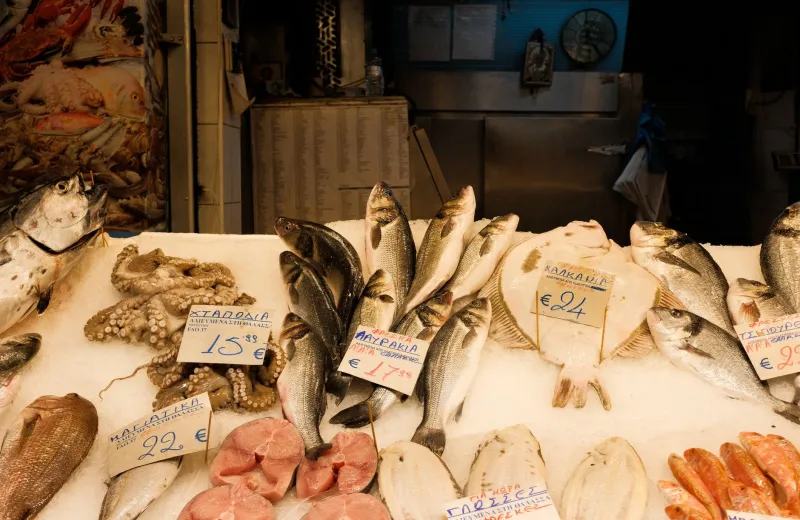
There is a moment, familiar to anyone who has dined seriously at a Japanese table, when a single piece of fish arrives and the room seems to quiet around it. The presentation is restrained. The color is precise. And the taste, when it finally arrives, carries a weight that goes beyond the palate. In Japan, that weight has a name — and it is not merely culinary.
For centuries, certain fish have occupied a privileged position in Japanese culture not simply because they taste exceptional, but because they are believed to carry good fortune. This is not superstition dressed in culinary language. It is a sophisticated tradition in which mythology, ecology, and gastronomy are woven into a single coherent philosophy — one that has practical implications for any American diner willing to look more closely at what they are selecting from the seafood counter.
The God in the Water: Ebisu and the Sacred Fish
To understand why certain fish are considered auspicious in Japan, one must begin with Ebisu — one of the Seven Gods of Fortune in Japanese mythology and the patron deity of fishermen, merchants, and those who seek honest prosperity. Ebisu is almost always depicted with a fishing rod in one hand and a large sea bream, known in Japanese as tai, tucked under his arm. That image is not incidental. It has shaped Japanese food culture in profound and lasting ways.
The sea bream (Pagrus major, or madai) became, through this association, the single most symbolically loaded fish in the Japanese culinary canon. It is served at weddings, New Year celebrations, and occasions of significant achievement. Its name in Japanese is itself auspicious — tai forms the final syllable of omedetai, meaning "congratulations" or "auspicious." Language and flavor converge in a single ingredient.
But the story does not end with sea bream. Japanese culinary tradition extends this logic of auspiciousness to a wider family of fish, each with its own seasonal and symbolic resonance.
Why the Auspicious Fish Tend to Be the Best-Tasting Fish
Here is where mythology and gastronomy become genuinely interesting companions. The fish historically celebrated in Japan as symbols of fortune — sea bream, yellowtail (buri), salmon (sake), and Pacific saury (sanma) — are not arbitrary choices. They are, almost without exception, species that arrive at peak flavor during culturally significant moments in the Japanese calendar.
Yellowtail, for instance, reaches its richest fat content in winter, precisely when it is called buri — a name used only for the mature, fully developed fish. In Japanese tradition, buri is a shusse-uo, a "career fish" that changes its name as it grows, each stage considered increasingly auspicious. The fully matured buri is served at New Year's tables across Japan not merely for symbolic reasons, but because that is the precise moment when its flavor is most extraordinary. The cultural calendar and the ecological calendar align.
Pacific saury arrives in autumn with a fat content that makes it ideal for grilling over charcoal. Its arrival has historically signaled the transition into a season of abundance. The fish is celebrated in poetry, in festivals, and at the dinner table simultaneously — because the Japanese culinary tradition has never separated aesthetic pleasure from sensory experience.
This alignment is not coincidental. Over generations, communities that depended on the sea for sustenance developed an intimate knowledge of fish behavior, migration, and peak condition. That knowledge became encoded in ritual and mythology, ensuring that the most nutritionally and gastronomically valuable fish were also the ones most eagerly anticipated and most carefully prepared.
Selecting Auspicious Fish at an American Market
For American diners, this tradition offers a genuinely useful framework for navigating the seafood counter — one that goes beyond the standard advice about clear eyes and firm flesh.
Sea Bream (Tai / Red Snapper): True Japanese madai can be found at Japanese specialty markets and some high-end fishmongers in major cities. American red snapper is a reasonable substitute in terms of texture and mild sweetness, though the flavor profile differs slightly. When selecting it, look for skin with a vibrant pink-to-red hue, flesh that is firm and translucent at the edges, and a clean, oceanic scent. This fish rewards simple preparation — salt-grilling (shioyaki) or steaming with ginger and scallion allows its natural sweetness to lead.
Yellowtail (Buri / Hamachi): Available at most Japanese restaurants and increasingly at quality fish markets, yellowtail in its mature winter form offers a fatty richness that makes it ideal for both sashimi and braising. When purchasing, seek out fish with a deep, creamy-pink flesh and visible marbling. Avoid anything with browning along the edges or a sharp, ammonia-forward smell.
Salmon (Sake): Perhaps the most accessible of the auspicious fish for American consumers, salmon's cultural significance in Japan is tied to its role as a seasonal gift — historically smoked or salted for preservation and offered as a ceremonial item. When selecting fresh salmon, prioritize wild-caught Pacific varieties when in season. The flesh should be deeply colored, moist but not wet, and the skin should appear tight and lustrous.
Pacific Saury (Sanma): Less commonly found in the United States but available at Japanese grocery stores, particularly in autumn. If you encounter it, treat the opportunity seriously. This is a fish that rewards a very hot grill and very little intervention. Its high fat content means it cooks quickly and forgives very little overcooking.
Eating with Intention
What the Japanese tradition of auspicious fish ultimately teaches is not that eating certain species will bring you luck in any literal sense. It teaches something more subtle and, in many ways, more valuable: that the act of selecting, preparing, and eating food with awareness — with knowledge of its origins, its season, and its cultural significance — transforms a meal into something larger than sustenance.
At Tamaniwa Ebisu, this philosophy sits at the center of how we approach the table. The name itself invokes Ebisu, the smiling god with his fishing rod and his sea bream, the deity who understood that honest work and careful attention are the only reliable paths to genuine fortune. Whether that fortune manifests as a remarkable meal or something more lasting is, perhaps, a question worth sitting with.
The next time you stand at a seafood counter, consider not only what looks fresh, but what the season is asking you to choose. The fish that is most alive with flavor right now is, in the Japanese culinary tradition, also the most fortunate one to bring home. That is not mythology. That is simply paying attention.