Heard in the Hush: How Japanese Restaurants Use Silence as a Culinary Ingredient
Walk into most American restaurants on a Friday evening and you will be met with a particular kind of noise: the clatter of silverware, the low roar of overlapping conversations, music chosen to keep the energy moving. For many diners, that ambient buzz signals that a place is alive, welcoming, worth being in. Silence, by contrast, can feel like failure — an empty room, a faltering kitchen, an awkward table.
In Japan, the relationship between dining and silence is altogether different. In the country's most thoughtful establishments — from centuries-old kaiseki rooms in Kyoto to intimate counter restaurants in Tokyo — quiet is not the absence of something. It is the presence of something essential. It is, in the truest sense of the word, an ingredient.
The Philosophy of Ma: Space That Holds Meaning
To understand silence in Japanese dining culture, one must first understand the concept of ma (間). Roughly translated as "negative space" or "meaningful interval," ma is a foundational principle in Japanese aesthetics that appears across architecture, music, theater, and visual art. It is the pause between notes that gives music its shape, the empty room that defines what a home is for, the breath between sentences that allows words to land.
At the Japanese table, ma governs the rhythm of service, the arrangement of dishes, and the atmosphere of the room itself. A skilled host understands that the space between courses — the moment of quiet anticipation before a bowl arrives — is as much a part of the dining experience as the dish itself. To rush through that interval, to fill it with noise or chatter, is to diminish what the food is about to offer.
This is not a philosophy of austerity. It is a philosophy of attentiveness.
What Silence Allows the Diner to Do
When a room is quiet, the senses redistribute. What the ears can no longer easily parse, the other senses begin to absorb. The sound of a dashi broth being ladled becomes audible. The faint cedar scent of a lacquered tray registers. The visual arrangement of a dish — the single sprig of kinome, the precise angle of a grilled piece of fish — commands genuine attention rather than competing with background noise for a fraction of the diner's awareness.
Japanese culinary culture has long understood that flavor is not experienced by the tongue alone. It is experienced by the whole body, in a whole moment. Silence creates the conditions for that wholeness. It slows the meal down in the most productive way possible, allowing each course to exist fully before the next one arrives.
For American diners accustomed to eating as a secondary activity — something done alongside conversation, scrolling, or half-watching a game — this can feel disorienting at first. The quiet asks something of you. It asks you to be present.
The Role of the Restaurant in Cultivating Quiet
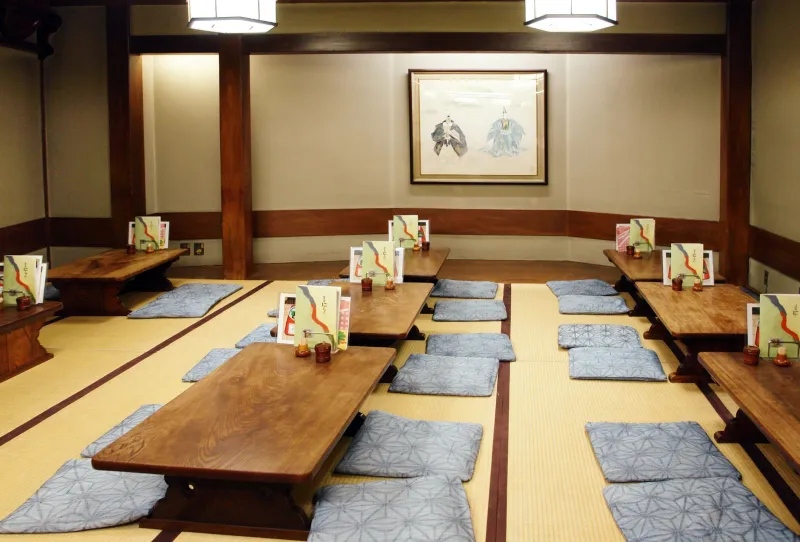
Authentic Japanese restaurants that honor this tradition do not arrive at their quietude by accident. Every design decision contributes to it. Natural materials — wood, stone, paper screens, washi walls — absorb sound rather than reflecting it. Seating arrangements are considered not only for comfort but for acoustic separation. Music, when present at all, is chosen to fade into the background rather than animate it.
Service, too, is choreographed around the preservation of the diner's interior experience. Staff in traditional establishments move with deliberate economy. Dishes are placed and removed with care. Explanations of courses, when offered, are given quietly and briefly, then withdrawn — not because conversation is unwelcome, but because the room itself has a voice, and that voice deserves to be heard.
This is distinct from coldness or formality for its own sake. The hush of a well-run Japanese dining room is warm. It communicates that the kitchen has worked carefully, that the ingredients deserve your full attention, and that your experience tonight is worth protecting.
Silence as Respect for the Craft
There is also a dimension of silence in Japanese dining culture that functions as a form of respect — for the chef, for the ingredients, and for the act of cooking itself. In Japan, preparing food is understood as a serious craft, one that demands years of study and a kind of devotion that borders on the spiritual. To eat in silence, or in measured quiet, is to acknowledge that devotion.
This is why the sound of a Japanese kitchen — the hiss of a pan, the careful tap of a knife — carries a different quality in an open-kitchen format than it might elsewhere. It is not performance. It is evidence of work being done with full concentration. The diner who listens, who allows the kitchen's sounds to reach them through the quiet of the dining room, is participating in something that goes beyond consumption.
Bringing the Hush Home
For American diners who have encountered this quality of silence in a Japanese restaurant and wished to carry some of it home, the invitation is genuine. It does not require a redesigned kitchen or a collection of lacquerware. It begins with a decision: to eat one meal this week without a screen nearby, without music competing for your attention, without conversation filling every available pause.
Set the table with care. Light something if you like. Serve the food slowly, one component at a time if possible. And then — simply listen to what the meal has to say.
The Japanese culinary tradition has spent centuries learning that the most profound flavors are often found not in a louder dish, a bolder sauce, or a more dramatic presentation, but in the quiet space that allows any dish to be truly tasted. The hush, it turns out, is not empty at all. It is full of everything the meal is trying to give you.