Less on the Plate, More in the Moment: The Deep Philosophy Behind Japanese Portion Sizes
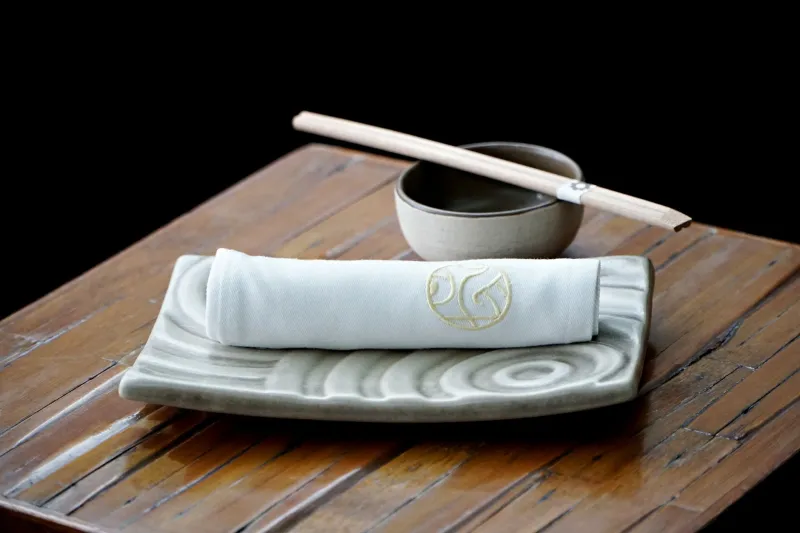
There is a moment that nearly every first-time visitor to a traditional Japanese restaurant experiences: the food arrives, elegant and precise, arranged with evident care—and yet there seems to be so little of it. For an American diner conditioned by decades of heaping servings and bottomless bread baskets, the initial reaction can border on bewilderment. Where is the rest?
That question, as it turns out, contains within it an entire cultural misunderstanding. And resolving it may be one of the more meaningful shifts quietly reshaping how Americans think about dining.
The Concept of Ma: Space as Substance
To understand Japanese portion philosophy, one must first understand ma—a concept that has no precise English equivalent, though it is often translated as "negative space" or "meaningful pause." In architecture, music, and the visual arts, ma refers to the intentional emptiness between elements, the silence between notes, the void that gives shape to what surrounds it.
At the Japanese table, ma operates in exactly the same way. The white expanse of a ceramic plate is not wasted surface—it is a deliberate frame. The modest portion of grilled fish or braised vegetables placed at its center is meant to be seen in its entirety, appreciated as a complete composition rather than as a component of a larger pile. Chefs trained in this tradition speak of feeding the eye before the stomach, of inviting the diner into a moment of genuine attention before the first bite is taken.
"When I plate a dish," explains Kenji Murakami, a Japanese chef who has operated a kaiseki-influenced restaurant in San Francisco for nearly a decade, "I am not thinking about how to fill space. I am thinking about how to use space. The emptiness around the food is part of the dish. It tells the guest: look carefully, this is worth your attention."
This is a fundamentally different relationship with food than the one most Americans are taught—one rooted not in scarcity but in a disciplined form of generosity that asks the diner to meet the chef halfway.
Hara Hachi Bu: The Wisdom of Eighty Percent
Beyond aesthetics, Japanese dining culture is informed by a principle of physiological wisdom that modern nutritional science has only recently begun to validate. The phrase hara hachi bu—loosely translated as "eat until you are eighty percent full"—is a dietary guideline attributed to Confucian teaching that has been embedded in Japanese food culture for centuries, and is particularly associated with the long-lived residents of Okinawa.
The science behind this practice is now well-documented. The body's satiety signals lag behind actual consumption by approximately twenty minutes, meaning that eating to the point of fullness in real time virtually guarantees overeating. Stopping at eighty percent, by contrast, allows the body to reach comfortable satiation without the sluggishness and discomfort that often follow a large American-style meal.
Japanese restaurants, particularly those serving traditional multi-course formats such as kaiseki or omakase, are structured around this principle by design. Courses arrive in deliberate sequence, each small, each intentional. The cumulative experience is one of sustained pleasure rather than a single overwhelming event. By the meal's end, a guest is satisfied—genuinely, comfortably satisfied—without ever having felt the need to loosen a belt.
"My American guests often tell me they were skeptical at first," says Yoko Tanaka, who runs a kaiseki dining room in New York's West Village. "They worry they will leave hungry. But by the end of the meal, they always say the same thing: they feel perfectly full, and they feel good. Not heavy. Not tired. Just good."
The American Recalibration
For decades, portion size in the United States functioned as a direct proxy for value. More food meant a better deal. Restaurant portions grew steadily through the latter half of the twentieth century, a trend that researchers at New York University documented extensively, finding that American restaurant meals now routinely contain two to four times the recommended caloric intake for a single sitting.
The consequences of this cultural equation have been well-publicized. But the correction, when it has come, has often felt punitive—smaller portions presented as a sacrifice, a concession to health rather than an invitation to pleasure.
What Japanese dining culture offers is a genuinely different framing. Restraint here is not deprivation rebranded. It is a considered philosophy in which the quality of attention paid to food is inversely proportional to the quantity consumed. When there is less on the plate, each element demands and rewards closer consideration. The texture of a single piece of sashimi, the precise seasoning of a small bowl of miso, the interplay of flavors in a carefully composed bite—these experiences are available only when the diner is not overwhelmed.
Increasingly, American diners appear ready to receive this message. Industry data from the National Restaurant Association has noted a growing consumer preference for what analysts describe as "quality-forward" dining—experiences in which ingredients, technique, and presentation take precedence over sheer volume. Fine dining establishments across major American cities have reported that guests are more frequently requesting tasting menus and prix fixe formats, structures that by their nature impose a Japanese-style discipline on portion and pacing.
Teaching the Palate to Listen
Chefs working at the intersection of Japanese tradition and American expectation describe a process that is less about convincing guests and more about creating the conditions in which guests convince themselves.
"I never argue with a guest about portion size," says Murakami. "I just serve the meal the way it is meant to be served. And almost always, by the third or fourth course, something shifts. They stop thinking about what they are not getting and start paying attention to what they are actually eating. That is the moment I am working toward."
That moment of attention—of genuine presence at the table—is precisely what Japanese dining culture has always sought to cultivate. It is what the carefully arranged plate, the unhurried pacing, and the precisely sized portion are all quietly working toward.
In an era of distracted eating, meals consumed in front of screens, and dining reduced to fuel delivery, the Japanese insistence that a meal deserves to be experienced rather than simply completed begins to look less like cultural idiosyncrasy and more like a practice worth learning.
A Different Definition of Enough
The American appetite for abundance is not inherently wrong. It reflects a cultural history in which food security was hard-won and generosity expressed itself through plenty. But as that history evolves, so too can its expressions at the table.
Japanese dining offers a compelling alternative definition of satisfaction—one measured not in volume but in the quality of attention, the integrity of ingredients, and the care embedded in each small, considered serving. To dine in this tradition is to discover that enough can be a remarkably precise and generous thing.
At Tamaniwa Ebisu, this philosophy informs everything we do—from the composition of each plate to the rhythm of a meal's unfolding. We invite our guests not to eat less, but to experience more.