What the Fish Tells You Before You Buy It: Lessons from the Japanese Art of Sensory Assessment
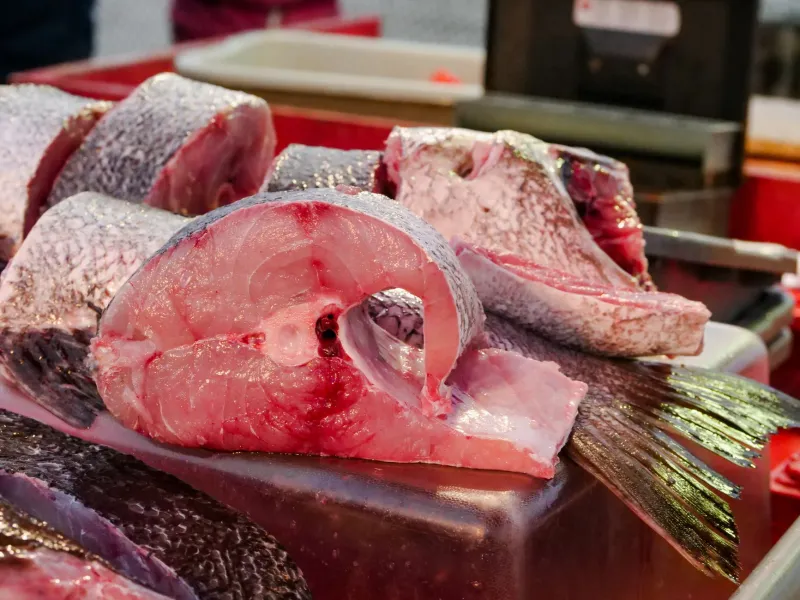
There is a particular kind of knowledge that does not arrive through instruction alone. It accumulates slowly, through repetition, through failure, through the memory of a thousand mornings standing at the edge of a market stall with cold hands and an open mind. Japanese chefs who work with seafood professionally describe this knowledge almost reluctantly—not because it is a secret, but because it resists easy translation into words. It is, at its core, a conversation between a person and a living ingredient. And like any meaningful conversation, it requires presence.
For American home cooks, the fish counter at a local grocery store or farmers' market can feel like a place of uncertainty rather than confidence. The options are plentiful, the labels occasionally misleading, and the staff—however well-intentioned—are not always equipped to answer nuanced questions about quality. Learning to assess freshness the way a Japanese chef does does not require years of professional training. It requires a shift in attention, and a willingness to trust your senses over the packaging.
The Eyes Are Only the Beginning
Most American shoppers, when evaluating fish, begin and end with appearance. They look for color, for glistening surfaces, for the absence of obvious discoloration. These are reasonable starting points, but they represent only the surface of what a trained eye—and body—can detect.
In Japanese culinary tradition, visual assessment of fish is considered thorough only when it accounts for specific structural details. The eyes of a whole fish should be clear and slightly convex, almost as though they are pressing outward with residual vitality. Eyes that have begun to sink inward or cloud over indicate that cellular breakdown is already well underway. The gills, when visible, should present a deep, saturated red—not the brownish-pink of a fish that has been sitting too long. Japanese chefs speak of this color not merely as an indicator of freshness but as evidence of the fish's final health. A well-caught, well-handled fish carries that color like a signature.
The skin itself deserves attention beyond its sheen. In many Japanese fish varieties, the scales should lie flat and adhere firmly to the body. Loose or missing scales suggest rough handling, which often correlates with accelerated deterioration. Even on fillets, where scales are absent, the flesh should appear dense and unified—not separating at the seams of its natural muscle structure, a condition Japanese professionals sometimes describe as the flesh "opening" before its time.
Smell as a Language
Perhaps the most underutilized sense in the American approach to buying fish is the sense of smell. Many shoppers are conditioned to associate any fish odor with poor quality, but this conflates two very different things. Fresh, high-quality fish has a smell—it is simply not an unpleasant one.
Japanese chefs describe the scent of truly fresh seafood as oceanic rather than fishy. It recalls salt air, cool water, and the faint mineral quality of clean sea environments. The compound responsible for the sharp, ammonia-adjacent odor most people associate with bad fish—trimethylamine—is produced by bacterial activity and is essentially absent in fish that has been properly handled from catch to counter. When that odor is present, even faintly, it is not a minor imperfection. It is the ingredient communicating that the window for optimal use has narrowed considerably.
At a fish counter, it is entirely appropriate to ask whether you may lean in and assess the scent of a fillet before purchasing. Reputable fishmongers will not be offended. In fact, a vendor who discourages this kind of inquiry is worth noting.
The Conversation of Touch
Texture is where the Japanese sensory approach to fish becomes most sophisticated—and most difficult to convey through writing alone. The practice of pressing gently on fish flesh to test its resilience is standard in professional Japanese kitchens, and it communicates something that no visual cue can fully replicate.
Fresh fish flesh has what might be described as a memory. When pressed lightly, it yields and then returns—not immediately, but with a kind of deliberate elasticity. As fish ages and proteins begin to break down, this quality diminishes. The flesh becomes passive under pressure, leaving an indentation that lingers. Japanese chefs often describe this as the difference between flesh that is alive in some residual sense and flesh that has simply stopped responding.
For whole fish, the body itself should feel firm when lifted. A fish that bends easily under its own weight, drooping at the head and tail when held in the middle, has typically lost structural integrity in ways that correlate with reduced quality. This is a test that takes seconds and requires no special equipment—only the willingness to handle the ingredient with intention.
What the Market Itself Tells You
Beyond the fish, Japanese culinary philosophy teaches that the environment in which an ingredient is sold reveals something about the ingredient itself. A well-maintained fish counter—one where ice is kept clean and replenished, where standing water is absent, where the staff handles product with care rather than haste—is more likely to carry fish that has been treated with the same attentiveness throughout its journey from water to display.
This is not a guarantee, but it is a reasonable inference. In Japan, the relationship between a chef and a trusted fishmonger is considered foundational—not a transactional convenience but a professional partnership built on mutual standards. American home cooks can cultivate a version of this by returning consistently to vendors who demonstrate care in their presentation and who are willing to engage with questions about sourcing, handling, and arrival dates.
Asking when a particular fish arrived is not an intrusive question. It is the beginning of exactly the kind of dialogue that elevates an ordinary purchase into an informed one.
Building the Instinct Over Time
The Japanese concept of shokunin—the dedicated craftsperson who refines a single skill over a lifetime—offers a useful framework for thinking about this kind of knowledge. No one develops a fishmonger's intuition in an afternoon. But every attentive market visit adds a layer of understanding that compounds over time.
Begin with one type of fish that you purchase regularly. Study it. Note the differences between visits, between vendors, between seasons. Ask questions. Trust your nose even when it contradicts the label. Over time, the signals that once seemed subtle will become legible—not because the fish has changed, but because you have learned its language.
At Tamaniwa Ebisu, we believe that authentic Japanese dining begins long before the table is set. It begins with the quality of attention brought to every ingredient, and the respect extended to every step of the journey that brings it to the plate. The fishmonger's intuition is not a professional secret. It is an invitation, extended to anyone willing to slow down and listen.