What Japanese Fish Markets Know That American Grocery Stores Don't
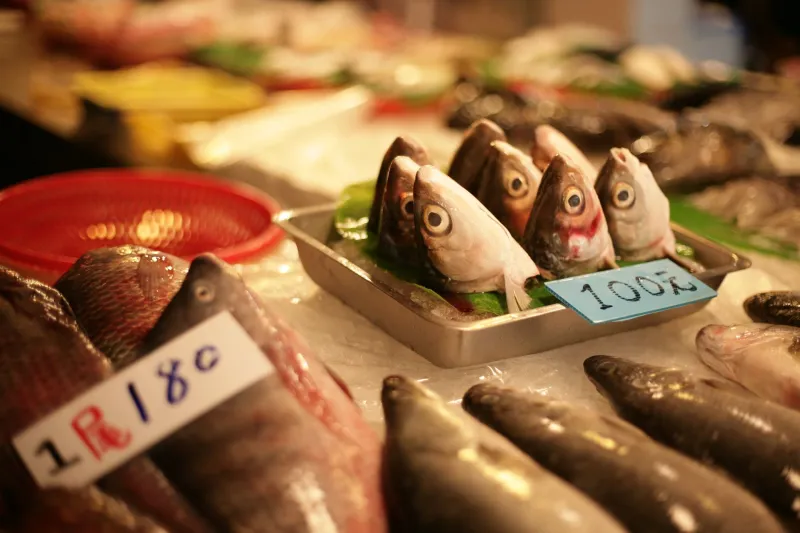
There is a particular kind of silence that falls over Tsukiji's outer market just before dawn. Buyers move with quiet authority between rows of glistening fish, crouching low, pressing fingertips gently against flesh, tilting a cut toward the light. No one is hurried. No one is guessing. The evaluation happening in those early morning hours is not intuition — it is a disciplined visual and tactile language developed over generations, one that informs some of the finest seafood preparation in the world.
For American home cooks accustomed to sealed plastic trays beneath fluorescent lighting, this world can feel remote. Yet the principles Japanese fish market professionals use every day are entirely learnable — and applying even a fraction of them will raise the quality of every piece of seafood that reaches your table.
The Relationship Between Fishmonger and Chef
In Japan, the connection between a skilled fishmonger and a serious chef is not transactional. It is relational. A respected itamae — the head chef at a traditional Japanese restaurant — often visits the same vendor for years, sometimes decades. Over time, the fishmonger learns the chef's preferences with a precision that borders on the personal: which cuts are favored for sashimi, what weight range suits a particular preparation, and crucially, when to set something aside because it simply isn't right today.
This relationship creates accountability that a supermarket supply chain rarely replicates. When a fishmonger's reputation depends on the quality of what they sell to a chef whose own reputation depends on what they serve, the standards become self-reinforcing. The fish that makes it to a serious Japanese kitchen has survived multiple layers of discernment before it is ever touched by a knife.
American diners visiting Japanese restaurants — or cooking Japanese-inspired dishes at home — benefit from understanding that the ingredient itself carries much of the culinary responsibility. Technique matters, but in Japanese cuisine, it begins at the source.
What Fresh Fish Actually Looks Like
The eyes are the most immediate indicator of quality, and they are rarely discussed in American grocery contexts. A truly fresh fish will have eyes that are clear, bright, and slightly convex — almost as though they are pressing outward against the surface. As a fish ages, the eyes cloud, flatten, and eventually sink inward. By the time a fish reaches the back of a display case with sunken, milky eyes, it has already passed its best window for quality eating.
The gills come next. Lift the gill flap if you are permitted to do so — a good fishmonger will not object to an informed customer. Fresh gills are a vivid, saturated red or deep pink, moist but not slimy. Gills that have turned brown, gray, or carry any faint ammonia odor are telling you something important about the timeline of that fish's journey to the counter.
Skin and scales deserve equal attention. A fresh whole fish holds its scales firmly, with a surface that catches light cleanly. The skin should appear taut and lustrous, not dull or tacky. When pressed gently with a finger, the flesh of a fresh fish springs back almost immediately. Flesh that holds the indentation — what professionals sometimes call "doughy" — has lost cellular integrity and will not hold up to fine preparation.
For fillets, where these whole-fish indicators are unavailable, the cut surface itself becomes the guide. Look for clean, defined muscle striations rather than a soft, blurred appearance. The color should be vivid and true to the species — not faded or graying at the edges. A fillet should smell of clean seawater or almost nothing at all. Any sharp, sour, or distinctly "fishy" odor is not a sign of the sea; it is a sign of decomposition beginning.
Understanding Japanese Grading and What It Means for Diners
Japan applies formal grading systems to several prized species, most famously tuna. The grading of hon-maguro — bluefin tuna — involves assessment of fat distribution, color consistency, texture, and origin. The highest grades, reserved for the toro cuts of the belly, command extraordinary prices at auction because they represent a convergence of optimal conditions: the right season, the right fishing grounds, and the right handling from the moment the fish leaves the water.
While American consumers rarely encounter these formal grading designations outside of specialty Japanese markets or high-end sushi restaurants, the underlying logic is worth internalizing. Grade is not simply about size or species — it is about fat content in the right places, the absence of stress damage in the flesh (which can result from how a fish is caught and handled), and the integrity of the cold chain from ocean to counter.
When shopping at a domestic seafood market or fishmonger, it is reasonable to ask directly: How did this fish arrive? Was it fresh or previously frozen? When was it delivered? A knowledgeable vendor will answer these questions without hesitation. One who deflects or cannot answer them is, in a sense, answering them anyway.
Practical Lessons for the American Seafood Shopper
Building a relationship with a local fishmonger — even at a farmers market or specialty grocer — is among the most effective investments an American home cook can make. Visit on days when deliveries are known to arrive. Ask what came in that morning. Express a preference for specific preparations, and ask what the fishmonger would recommend for those purposes today. Over time, this conversation becomes more efficient and more rewarding for both parties.
When whole fish is unavailable and fillets are the only option, prioritize vendors who keep fish on ice rather than in standing water, which accelerates deterioration. Request that fish be wrapped separately from other items, and transport it in a cooler when possible, particularly during warmer months.
For shellfish, the Japanese standard is equally instructive. Live clams, oysters, and mussels should close when tapped — an open shell that does not respond to contact is a shell that should be left behind. Shrimp should carry no blackening around the head or along the body, which indicates oxidative breakdown.
Bringing the Market's Intelligence to the Table
There is a phrase sometimes used in Japanese culinary philosophy: shun, referring to the peak moment of a seasonal ingredient's quality. Fish, perhaps more than any other ingredient, exists within an extremely narrow window of shun. Unlike aged beef or a ripening cheese, fish does not improve with time after harvest. Its finest expression is its earliest one.
Japanese fish market culture is organized entirely around capturing that window. The pre-dawn auctions, the careful handling, the trained eye of the fishmonger — all of it exists in service of delivering an ingredient at the precise moment it is most itself.
For American home cooks who have learned to evaluate wine labels or select the ripest produce at the farmers market, developing this same literacy around seafood is simply the next step. The knowledge is not arcane. It is observational, tactile, and learned through repetition. Begin with the eyes. Move to the gills. Press the flesh. Trust what you find.
The fish market, in Japan or anywhere else, rewards the attentive customer. And the rewards, ultimately, arrive at the table.