What the Empty Plate Is Telling You: The Hidden Language of Japanese Minimalist Presentation
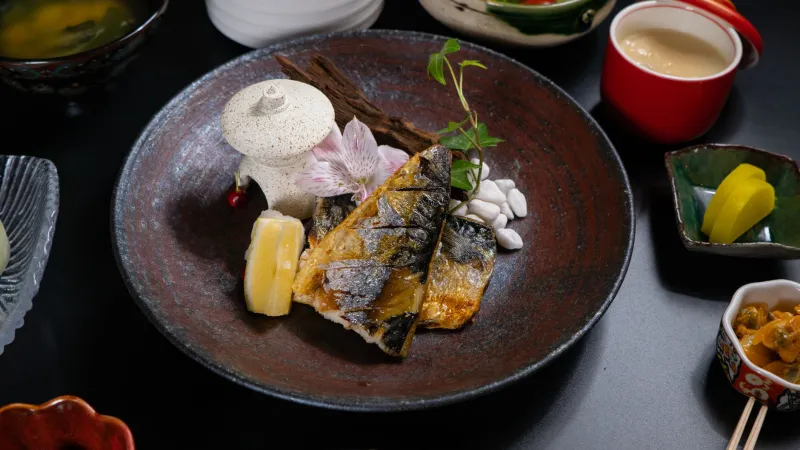
The first time many American diners sit down at an authentic Japanese restaurant, a quiet confusion settles in. The plate arrives — pristine, carefully arranged — and yet much of its surface remains bare. There is no sauce pooled generously across the rim, no garnish crowding every inch of porcelain. What fills the dish is deliberate. What does not fill it is equally so.
This is not an accident of portion size or an oversight by the kitchen. It is a centuries-old design philosophy made visible, and learning to read it changes everything about how you experience a Japanese meal.
The Concept of Ma: Space as Substance
In Japanese aesthetics, the word ma (間) refers to a meaningful pause — an interval of space or time that carries its own weight. Architects use it. Musicians observe it. And Japanese chefs apply it directly to the plate.
Ma is not emptiness in the Western sense, where blank space suggests something missing. Rather, it is active negative space — a breathing room that gives the elements surrounding it greater definition and presence. When a single slice of sashimi rests at the edge of a wide, matte-glazed dish with open ceramic stretching beyond it, the eye is drawn inward. The fish becomes the subject of a composition, not merely a component of a meal.
For American diners accustomed to plates where abundance signals generosity, this requires a genuine reorientation. The impulse to equate fullness with value is deeply cultural. In the United States, a heaped plate often communicates hospitality, effort, and satisfaction. Japanese plating operates from an entirely different vocabulary — one in which restraint is the most sophisticated form of respect.
Visual Harmony Before the First Bite
Japanese chefs are trained to think of the plate as a canvas. The placement of each element — its angle, its relationship to adjacent ingredients, the distance between components — is considered with the same care a painter might give to negative space on a canvas. This approach has a direct name in culinary training: moritsuke, the art of food arrangement.
The principles of moritsuke draw from classical Japanese visual arts. Asymmetry is preferred over symmetry. Odd numbers of elements are favored. Height, texture, and color contrast are balanced not to overwhelm, but to invite the eye to move naturally from one point to another. The open space of the plate functions as a frame, ensuring that whatever occupies it commands full attention.
This matters to the diner in a practical, sensory way. Research in food psychology has consistently demonstrated that visual presentation influences flavor perception before a single bite is taken. When the eye can isolate an ingredient — when it is not competing with four other components for visual attention — the brain begins anticipating its specific qualities. The diner arrives at that ingredient primed, focused, and more likely to register its nuance.
In short, the empty space is doing preparatory work on your palate.
The Vessel Completes the Dish
One aspect of Japanese table presentation that often surprises American guests is how intentionally the serving vessel is selected. In many Western fine dining contexts, the plate is largely neutral — white, round, and standardized — so that the food becomes the primary visual statement. Japanese cuisine inverts this relationship.
The bowl, the dish, the lacquered tray — these are chosen to complement the season, the ingredient, and the mood of the meal. A rough, earth-toned ceramic might cradle a single piece of grilled fish in autumn. A pale celadon dish might hold a cold preparation in summer. The vessel and the food exist in dialogue, and the open space between them is where that conversation becomes visible.
This also means that what appears to be a sparsely filled plate may in fact be a precisely filled one. The chef has accounted for the visual weight of the dish itself. Too much food would collapse the relationship between vessel and ingredient; too little would make the composition feel abandoned. The balance is intentional down to the centimeter.
What This Means for the American Diner
Approaching a Japanese meal with an awareness of ma and moritsuke does not require an art history degree. It requires only a brief pause before eating — a moment to observe the plate as a whole before engaging with any single element.
Notice where the food sits. Notice what surrounds it. Ask yourself what the chef is directing your attention toward. If a single piece of seafood rests on a leaf with open space on either side, that ingredient is the sentence. The rest of the plate is punctuation.
This practice also recalibrates expectations around portion. Many diners at authentic Japanese establishments initially feel uncertain about the size of individual courses, particularly in a kaiseki or omakase setting. Viewing each plate through the lens of intentional composition rather than caloric volume shifts the experience entirely. You are not receiving less. You are receiving exactly what that dish requires — no more, no less.
Bringing the Philosophy Home
The principles behind Japanese minimalist plating are not exclusive to professional kitchens. Home cooks across the United States have begun applying similar thinking to their own tables, and the results are often striking even without formal training.
Choosing a plate slightly larger than the portion demands. Resisting the urge to fill every inch. Placing food off-center rather than directly in the middle. These small decisions create visual breathing room that elevates even simple preparations. A soft-boiled egg with a drizzle of soy and sesame on a wide white dish looks entirely different from the same egg crowded onto a small plate with toast and fruit.
The lesson Japanese cuisine offers here is not about eating less or presenting food pretentiously. It is about giving each ingredient the space to be seen, considered, and ultimately tasted with full attention. At Tamaniwa Ebisu, this philosophy informs every plate that leaves the kitchen — not as an aesthetic affectation, but as a genuine expression of respect for the ingredient, the guest, and the act of dining itself.
The empty space on your plate has something to say. Take a moment, and let it speak.