Stillness on the Plate: How Japanese Dining Rituals Can Transform the Way Americans Eat
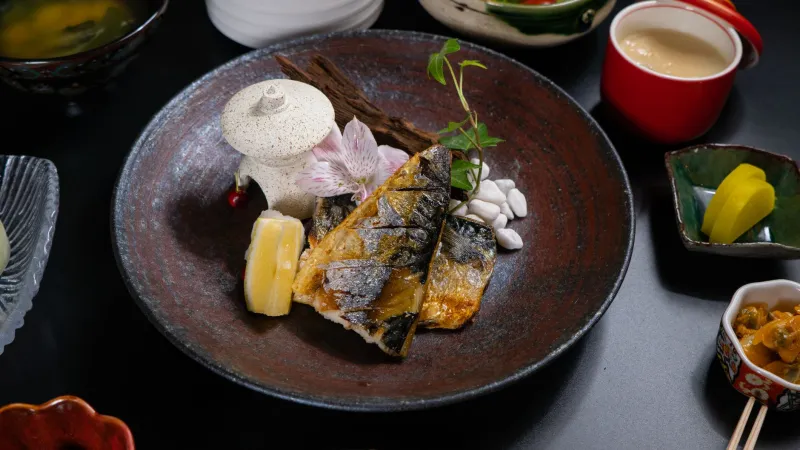
There is a particular kind of rush that defines American eating. Lunch breaks measured in minutes. Drive-throughs engineered for maximum throughput. Portion sizes calibrated not for pleasure but for volume. Against this backdrop, Japanese dining culture does not simply offer a different cuisine — it offers a different philosophy entirely.
At Tamaniwa Ebisu, we often hear guests remark that a meal here felt unlike any dining experience they had encountered before. Not because of any single dish, but because of the quality of attention that surrounded it. That quality has a name, and it is woven into the very structure of Japanese culinary tradition.
The Concept of Ma: Embracing Meaningful Pause
In Japanese aesthetics, ma (間) refers to the purposeful use of negative space — the pause between notes in music, the breath between words in conversation. Japanese dining is shaped by this same principle. A meal is not a sequence of items to be cleared from the table as efficiently as possible. It is a composition, and the silences between courses are as intentional as the courses themselves.
This stands in sharp contrast to the American dining model, where extended waits between dishes are often read as poor service. In a traditional Japanese setting, those intervals exist to allow the diner to fully absorb what they have just experienced — to notice how a delicate dashi broth has shifted the palate, or how a single piece of sashimi, consumed without distraction, carries more complexity than a plateful eaten in haste.
Chefs who have trained in Japan frequently describe a formative realization: that cooking slowly and eating slowly are not separate disciplines. They are the same discipline, approached from opposite ends of the table.
Kaiseki and the Architecture of a Meal
Few culinary traditions illustrate this philosophy more completely than kaiseki (懐石料理), the multi-course format rooted in the tea ceremony culture of Kyoto. A kaiseki progression might span eight to twelve courses, each one modest in size and extraordinary in intention. The sequence moves through textures, temperatures, and flavors in a carefully considered arc — from the delicate to the robust, from the raw to the braised, from the light to the deeply savory.
For American diners accustomed to entrée-centered meals, the experience can feel disorienting at first. Where is the main event? The answer, of course, is that every course is the main event. Kaiseki dismantles the hierarchy of the plate and replaces it with something more democratic: sustained, evolving attention.
Nutritionists have noted that this approach aligns naturally with how the human body processes satiety. When meals are consumed slowly and in measured portions, the brain has adequate time to register fullness — a mechanism that high-speed eating routinely bypasses. The Japanese concept of hara hachi bu, often translated as eating until you are eighty percent full, is not merely a cultural aphorism. It is a practice made possible by the pace at which meals are designed to unfold.
The Ramen Counter as a Meditative Space
One might assume that a bowl of ramen — a dish associated in the American imagination with convenience and affordability — operates outside this contemplative framework. In fact, the opposite is true.
In Japan, the ramen shop is a place of focused attention. Diners sit at a counter, facing the kitchen. The bowl arrives and is meant to be consumed without delay, while the broth is at its peak temperature and the noodles retain their texture. There are no lengthy conversations over a ramen bowl in the traditional sense. The meal commands presence.
The broth itself may have simmered for eighteen hours or more. The chashu pork has been braised with patience. The soft-boiled egg has marinated overnight. Every element of the bowl is the product of deliberate time investment, and consuming it with equivalent deliberateness is, in many ways, an act of respect for that labor.
Practical Shifts for the American Table
Adopting elements of this philosophy does not require a complete transformation of one's lifestyle. It begins with small, concrete decisions.
Put the phone away. The single greatest obstacle to mindful eating is the divided screen. Even setting a device face-down for the duration of a meal introduces a meaningful shift in attention.
Eat with chopsticks when possible. Beyond cultural authenticity, chopsticks physically slow the pace of eating by reducing the volume of food that can be conveyed in a single movement. This mechanical deceleration gives the body time to catch up with the meal.
Honor the sequence. When dining at a Japanese restaurant, resist the impulse to eat everything simultaneously. Allow each dish to occupy its moment before moving to the next.
Notice the vessel. Japanese tableware is chosen to complement the food it carries — the rough texture of an earthenware cup, the asymmetry of a handmade bowl. Taking a moment to observe these details is not pretension; it is the beginning of genuine presence.
Cook with patience. If you prepare Japanese dishes at home, resist shortcuts. Allow a dashi to steep rather than boil. Let flavors develop over time. The discipline of slow cooking transfers naturally to the discipline of slow eating.
What We Lose When We Rush
There is a cost to the speed at which Americans typically eat, and it extends beyond digestion. Meals consumed in haste are rarely remembered. They become transactions rather than experiences. The shared table — historically one of the most important sites of human connection — is reduced to a refueling stop.
Japanese dining culture preserves something that modern American life has largely surrendered: the understanding that a meal is worth the time it takes. At Tamaniwa Ebisu, this conviction shapes everything from the way our kitchen approaches preparation to the way our dining room is designed to encourage lingering. We believe that the most authentic gift we can offer our guests is not simply exceptional food, but the conditions in which that food can be truly tasted.
Slowing down, it turns out, is not an indulgence. It is the whole point.