Held to a Higher Standard: What Japanese Seafood Sourcing Reveals About American Expectations
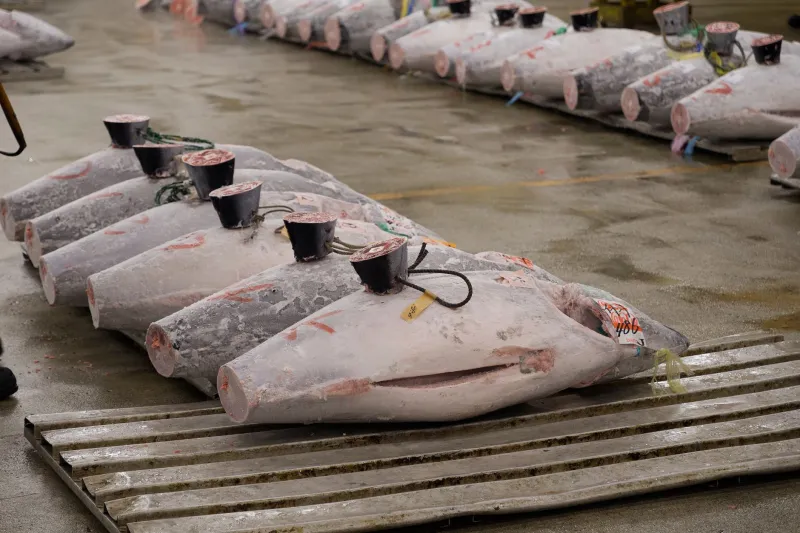
Imagine a fish that has been handled correctly from the moment it left the water—killed using a technique called ikejime, which preserves the integrity of the flesh by immediately calming the nervous system; packed in a precise ratio of ice to ensure consistent temperature without freezing; transported under conditions so controlled that a Japanese chef can tell, by the clarity of the eye alone, whether every step in that chain was executed properly. Now imagine that fish being rejected at the Tokyo market because the gills are a shade too pale, the belly wall slightly too soft.
This is not an exceptional scenario in Japan. It is routine. And it stands in stark contrast to what passes through the seafood supply chain in the United States every single day.
The gap between Japanese and American standards for fresh seafood is not simply a matter of geography or tradition. It reflects two fundamentally different answers to the same question: what does quality actually require, and who is responsible for protecting it?
The Japanese Fishmonger as Final Authority
In Japan, the fishmonger—the sakana-ya—occupies a position of genuine authority within the food supply chain. This is not merely a retail role. The skilled fishmonger is a trained evaluator, a relationship manager, and a quality gatekeeper whose judgment carries real consequence. Suppliers who deliver substandard product do not simply receive a complaint. They lose the relationship, often permanently.
This accountability structure creates a powerful incentive at every stage of the supply chain. Fishermen know that their catch will be assessed with precision. Distributors know that temperature deviations will be detected. Every participant in the chain understands that the standard is non-negotiable and that the fishmonger's eye is the last line of defense before the fish reaches a chef's cutting board.
The evaluation criteria applied at a Japanese fish market are both sensory and technical. Eyes must be bright, clear, and convex—not sunken or clouded. Gills must be vivid red, not brown or gray. Flesh must be firm and elastic, springing back when pressed. Scales must adhere cleanly. Odor must be oceanic and clean, never ammonia-forward or sulfurous. A fish that fails on any single criterion is subject to rejection, regardless of its species or price point.
What American Suppliers Routinely Accept
American seafood sourcing operates under a different logic—one shaped by scale, speed, and a consumer base that has, over decades, been conditioned to accept a considerably lower threshold of freshness.
In the United States, the majority of seafood passes through distribution networks that prioritize volume and shelf life over the kind of moment-by-moment quality assessment that defines Japanese practice. Fish may travel for days through multiple intermediaries before reaching a restaurant kitchen. Refrigeration standards, while regulated, are applied inconsistently. And at the retail and restaurant level, the personnel responsible for receiving seafood deliveries are rarely trained to the standard of a Japanese sakana-ya—or expected to be.
The result is that American diners have largely lost their frame of reference for what truly fresh fish tastes like. When the baseline is compromised, the compromise becomes invisible. A restaurant can serve fish that a Japanese chef would discard without hesitation, and American diners—accustomed to that baseline—will receive it without complaint.
This is not a criticism of individual chefs or restaurateurs. Many are working within systems that offer them limited visibility into the quality of their supply chain. It is, however, an observation about the systemic difference in expectations that shapes what ends up on the plate.
The Philosophy Behind the Practice
The Japanese approach to seafood quality is inseparable from a broader cultural philosophy about the relationship between human effort and natural gifts. In Japanese culinary tradition, the fish arrives at the table carrying the accumulated care of everyone who handled it—the fisherman who applied ikejime, the distributor who maintained the cold chain, the sakana-ya who assessed and vouched for its integrity, the chef who chose it with knowledge and respect.
This chain of custody is understood as a form of honor. To receive a fish carelessly, to accept a compromised product, is to dishonor every person who handled it before you—and to dishonor the fish itself, which gave its life to become part of a meal.
American culinary culture, at its finest, shares elements of this philosophy. The farm-to-table movement, the growing emphasis on sourcing transparency, the increasing number of American chefs who travel to Japan specifically to study seafood handling—all of these reflect an awareness that something important has been lost and a desire to recover it.
Practical Steps for Demanding Better
For American diners and home cooks who want to raise their own standards, the path forward is more accessible than it might appear.
Seek out Japanese-operated or Japanese-trained fishmongers. In cities with significant Japanese-American communities—Los Angeles, New York, Seattle, San Francisco, Honolulu—there are fish markets that operate according to Japanese quality standards. These establishments are worth seeking out, even if they require additional travel or expense.
Learn the basic sensory markers of freshness. The criteria applied by Japanese fishmongers are learnable. Clear, convex eyes; bright red gills; firm, elastic flesh; a clean oceanic smell. Applying these criteria at a fish counter—and being willing to decline a purchase that fails them—sends a market signal that quality matters.
Ask questions about supply chain. At a restaurant, it is entirely appropriate to ask where the fish was sourced, when it was received, and how it was handled. Restaurants that take quality seriously will welcome the question. Those that cannot answer it are telling you something important.
Understand that price is not a proxy for quality. Expensive fish handled carelessly is inferior to modestly priced fish handled with precision. The Japanese understanding of quality is process-based, not price-based. A fish is only as good as the care it received at every stage of its journey.
Raising the Conversation
At Tamaniwa Ebisu, our commitment to ingredient quality begins with the same question that a Japanese sakana-ya asks at the dock: does this meet the standard? Not the minimum acceptable standard. The standard that honors the fish, the fisherman, and the guest who will ultimately receive it.
American dining culture is fully capable of holding itself to this measure. The knowledge exists. The desire, among serious diners and serious chefs, is evident and growing. What is required is the willingness to ask more of the systems that supply our tables—and to recognize that accepting less is a choice, not a necessity.