Before the First Course: The Sacred Rituals That Shape Every Dish at a Japanese Restaurant
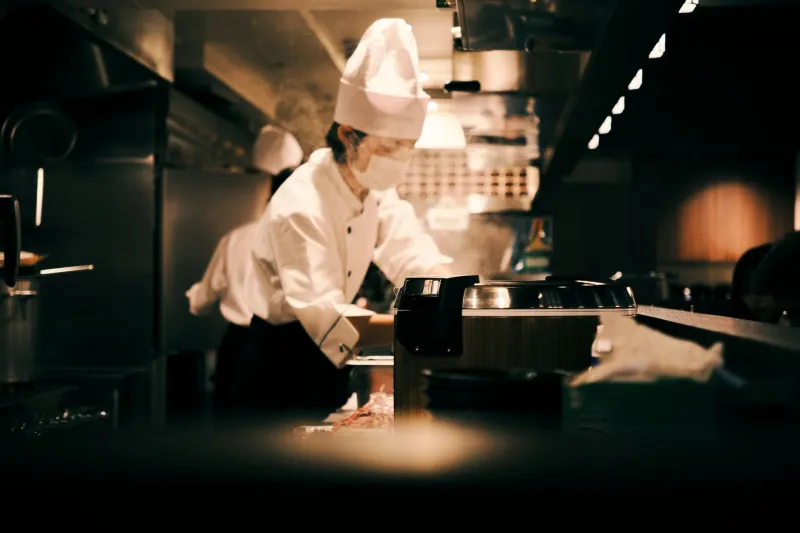
There is a moment in many Japanese restaurants—quiet, unhurried, and invisible to arriving guests—when the kitchen goes still. Knives rest on their wooden blocks. Aprons are straightened. A small offering of salt sits at the threshold of the entrance. The chef bows his head. What follows is not rehearsal. It is prayer.
For American diners accustomed to the back-of-house chaos that precedes a dinner service, this image may seem surprising. Yet across Japan, and in many authentic Japanese establishments throughout the United States, these pre-service rituals are as essential to the meal as the ingredients themselves. They are ancient in origin, practical in purpose, and—once understood—profoundly moving in what they reveal about the Japanese philosophy of food.
The Shinto Roots of the Kitchen Blessing
Shinto, Japan's indigenous spiritual tradition, holds that the natural world is inhabited by kami—divine spirits that dwell in rivers, mountains, forests, and the creatures that live within them. The ocean, in particular, has long been regarded as a sacred domain. Fish pulled from its depths are not merely protein; they are gifts from a living, animated universe.
Ebisu, one of the most beloved of Japan's seven gods of good fortune, is the patron deity of fishermen, merchants, and those who earn their livelihood from the sea. Statues of Ebisu—smiling, rod in hand, a sea bream tucked under one arm—appear at the entrances of fish markets, fishing boats, and restaurant kitchens throughout Japan. His presence is a reminder that every catch, every ingredient, every meal carries with it a lineage of gratitude stretching back to the water itself.
Before service begins, many Japanese chefs perform a brief ritual of acknowledgment to Ebisu and to the kami of the kitchen. This may take the form of a bow before a small household shrine, the placement of fresh water or salt as an offering, or a moment of silent gratitude for the ingredients that arrived that morning. It is not elaborate. It does not require an audience. But it is sincere.
Salt, Sake, and the Language of Threshold
The Japanese practice of placing small mounds of salt near a restaurant's entrance—known as morishio—is one of the most recognizable pre-service rituals, even if its meaning often goes unremarked. Historically, salt was used to purify spaces before important gatherings, to ward off negative energy, and to invite prosperity. In a restaurant context, it signals that the space has been spiritually prepared to receive guests.
Sake, too, plays a ceremonial role. In Shinto tradition, miki—sacred sake offered to the gods—appears at shrines throughout Japan as an expression of gratitude and supplication. Some chefs begin their day by pouring a small measure of sake before the kitchen altar, honoring both the deity and the rice farmers whose labor made the offering possible. This gesture closes a circle: from the earth to the table, from the farmer to the chef to the guest.
These acts are not superstition. They are a form of mindfulness so deeply embedded in Japanese culinary culture that many practitioners would struggle to articulate where tradition ends and personal conviction begins. They simply do it—because it has always been done, and because something feels incomplete without it.
How Intention Enters the Food
The concept of ki—often translated as life force or energy—is central to understanding why Japanese chefs regard pre-service preparation as inseparable from cooking itself. In Japanese culinary philosophy, the state of mind a cook brings to the kitchen is not a soft, peripheral concern. It is understood to directly influence the quality of the food.
A distracted chef, a kitchen filled with unresolved tension, a service begun without acknowledgment of the ingredients' origins—these are not merely morale problems. They are believed to register in the food, subtly but measurably. Conversely, a kitchen entered with gratitude, focus, and spiritual attentiveness is thought to produce dishes that carry that quality forward to the guest.
This may sound abstract to American ears trained on food science and kitchen management. But consider: the attentiveness required to perform a meaningful pre-service ritual is the same attentiveness that keeps a broth from over-reducing, a piece of fish from overcooking by thirty seconds, or a bowl of rice from being served without checking its texture. The ritual and the craft are not separate practices. They are the same practice, expressed in different registers.
What This Means for the American Diner
When you arrive at a Japanese restaurant that honors these traditions, you are entering a space that has already been prepared for you—not merely in terms of tablecloths and mise en place, but in terms of intention. The chef has already thought about you, in a sense, before you walked through the door. That awareness is present in the food.
This is part of what distinguishes the Japanese dining experience from a transaction. At its best, Japanese hospitality—omotenashi—is not a service model. It is a state of being. The pre-service ritual is where that state is consciously cultivated, where the chef transitions from an ordinary person going about their morning into someone who has accepted a responsibility to nourish another human being with care.
For American diners, this knowledge invites a reciprocal awareness. When you receive a dish prepared in this spirit, you are receiving something that carries more than flavor. You are receiving the product of a tradition that regards your meal as a sacred exchange between the sea, the earth, the cook, and the guest.
Receiving the Meal as It Was Intended
There is a Japanese expression—itadakimasu—spoken before eating. It translates roughly as "I humbly receive," and it is directed not only at the person who cooked the meal, but at every living thing that contributed to it: the fish, the farmer, the fisherman, the rain. It is the diner's counterpart to the chef's pre-service prayer.
When you understand what happened in that kitchen before you arrived—the salt at the door, the bow before the altar, the quiet moment of gratitude for the morning's catch—itadakimasu becomes something more than a polite formality. It becomes a genuine response to a genuine offering.
At Tamaniwa Ebisu, we believe that authentic Japanese dining is inseparable from the spiritual and philosophical traditions that gave it shape. The rituals that precede service are not theater. They are the beginning of your meal—even before you sit down.