The Hours We Cannot Give: Omakase, Presence, and the American Time Deficit
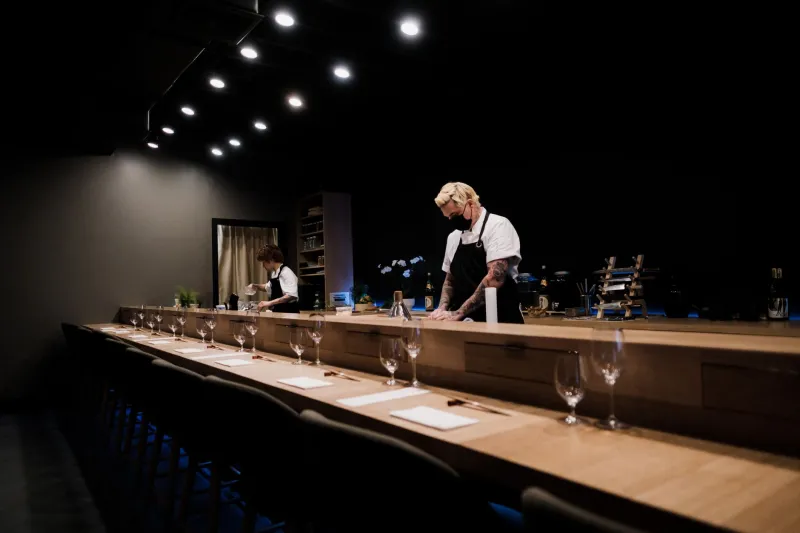
The reservation was for 7:00 p.m. on a Tuesday. The guest arrived at 7:04, apologized to the host, checked his phone twice before sitting down, and spent the first two courses mentally drafting a response to an email he had not yet received. By the time the chef placed the fifth course — a small piece of aged yellowtail that had been resting at precisely calibrated temperature for twenty minutes — the guest was, technically, present. In every meaningful sense, he was still in the office.
This scene is not unusual. It may, in fact, be the dominant American omakase experience.
A Form Designed for a Different Relationship with Time
Omakase — the Japanese dining format in which the guest entrusts the entire composition of the meal to the chef — is not simply a tasting menu with better fish. It is a philosophical proposition about attention. The guest who says omakase shimasu, "I leave it to you," is not merely delegating a food decision. They are agreeing to be present, to receive, to follow the chef's logic through the evening without the cognitive escape hatch of a menu.
This agreement presupposes something that Japanese dining culture has historically been better at protecting than its American counterpart: unstructured, unhurried time. The traditional omakase counter in Japan operates in a context where an evening meal is understood to occupy an evening — not a window between work and bedtime, not a reward efficiently inserted into a weeknight schedule, but a sustained act of attention that might last three hours and feel, at its best, like no time at all.
American work culture does not naturally produce this condition. A country in which the average worker leaves a significant portion of paid vacation unused is not a country that has made peace with the concept of deliberate, unhurried leisure.
What the Rush Actually Costs
The consequences of compressed omakase are not merely philosophical. They are sensory and relational.
A guest who is mentally elsewhere during the early courses misses the narrative arc that a skilled chef has constructed. Omakase is sequential and cumulative — each course commenting on the last, flavors building context for what follows. A distracted guest experiences this not as a progression but as a series of individual bites, some of which happen to be excellent. The difference between those two experiences is the difference between watching a film and watching clips from it.
The relational dimension suffers as well. The counter format that defines most omakase dining is designed for conversation — not the performative small talk of a conventional restaurant, but the quiet, genuine exchange between a cook and a guest who are paying attention to the same thing at the same time. When one party is distracted, the exchange collapses. The chef, trained to read the room and respond to a guest's engagement, finds themselves performing for an audience that is partially absent.
"I can feel when someone is not here yet," says one omakase chef operating in New York's Lower East Side, who asked not to be named. "I adjust. I give them time. But there are evenings when a guest never quite arrives, even though they are sitting two feet away from me."
How Restaurants Are Responding — and What They Are Sacrificing
The American market's appetite for omakase has grown considerably over the past decade, and with it has come pressure to adapt the format to American scheduling realities. Lunch omakase services, abbreviated evening formats running ninety minutes rather than three hours, and casual counter concepts offering streamlined versions at lower price points have all proliferated in major cities.
These adaptations are commercially sensible. They are also, in varying degrees, compromises.
The ninety-minute omakase is not a shorter version of the three-hour experience. It is a different experience — one in which the chef's pacing is compressed, the contemplative intervals between courses are reduced or eliminated, and the cumulative emotional effect that defines the finest examples of the form is difficult to achieve. The food may be equally skilled. The experience is structurally different.
Some restaurants have resisted adaptation entirely, maintaining long-form formats and accepting the narrower market that comes with them. Their reservation books, paradoxically, are often the fullest — suggesting that a meaningful portion of the American dining public is actively seeking permission to slow down, and will travel considerable distances to find a room that grants it.
The Workplace Culture Question
Underlying the omakase time problem is a broader question about American professional culture and its relationship to rest, pleasure, and the kind of sustained attention that genuine leisure requires.
The rise of workplace wellness initiatives, four-day work week experiments, and cultural conversations about burnout suggests that this relationship is under active renegotiation. Whether that renegotiation produces the conditions in which Americans can reliably bring their full presence to a three-hour dinner — rather than arriving as the exhausted residue of a twelve-hour workday — remains genuinely uncertain.
What is certain is that the omakase format, at its best, offers something that cannot be rushed without being lost: the experience of being entirely somewhere, in the company of a cook who has thought carefully about what you are about to receive. That experience is available to anyone willing to give it the one thing it requires above all others.
Time. Unhurried, unstructured, genuinely given time.
The fish will wait. Whether we can is the question.