Priced for Pleasure: The Business Case Behind Joy-Driven Japanese Dining
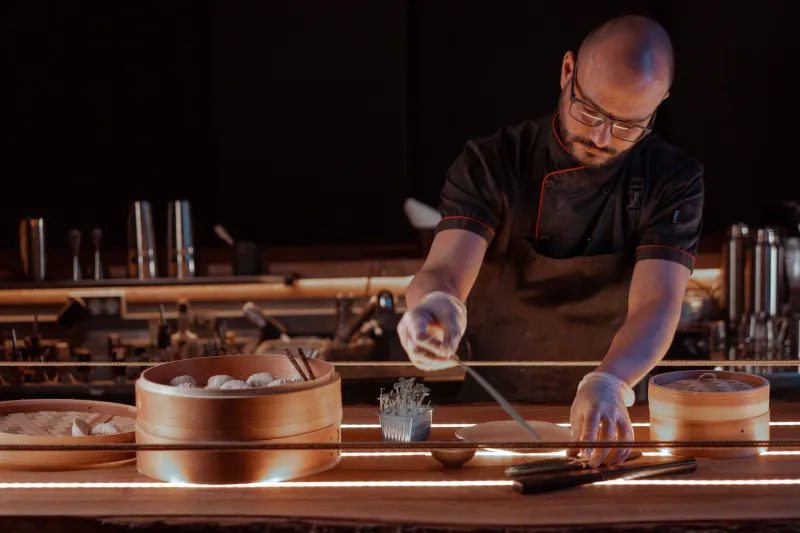
When a diner in Chicago pays $280 for an omakase dinner and walks away describing the chef's well-timed joke about a particularly assertive piece of aged tuna as the highlight of the evening, something worth examining has occurred. The food, by every account, was exceptional. Yet it was a moment of shared laughter — brief, warm, and entirely unscripted in its delivery — that sealed the memory. That diner booked a return visit before leaving the building.
This is not coincidence. It is, increasingly, strategy.
Joy as a Line Item
Japanese restaurant culture has long understood that the emotional register of a meal is inseparable from its quality. The concept of ma — the meaningful pause, the space between things — applies as much to a well-placed moment of levity as it does to the silence between courses. For restaurateurs who have studied this tradition carefully, creating joy is not a soft amenity. It is a discipline with measurable consequences.
Kenji Murakami, who operates a kaiseki restaurant in San Francisco's Japantown, describes his approach with characteristic precision. "We rehearse the arc of an evening the way a theater company rehearses a play," he explains. "There are moments we design for surprise, moments for warmth, moments for humor. The price of the meal reflects all of it — not just the ingredients."
This framing challenges a persistent American assumption: that a restaurant's value proposition lives almost entirely on the plate. In fact, the premium commanded by the best Japanese establishments in cities like New York, Los Angeles, and Seattle is underwritten by something far less tangible and considerably harder to replicate than sourcing quality fish.
The Loyalty Mathematics of Delight
Industry research consistently finds that emotionally resonant dining experiences generate disproportionate loyalty. A guest who leaves a restaurant having laughed, having felt seen, having experienced a moment of genuine human warmth, does not simply return — they recruit. Word-of-mouth referrals from emotionally engaged diners carry a conversion rate that no marketing spend can approximate.
For Japanese restaurants operating at the premium tier, this dynamic is especially pronounced. The omakase format, in which the guest surrenders menu control entirely to the chef, creates an unusually intimate stage for these moments. A chef who reads a table's energy and responds with a well-chosen anecdote about the morning's fish market, or who places a visually absurd garnish with a perfectly deadpan explanation, is performing emotional intelligence as much as culinary craft.
Yoshiko Tanaka, who consults with Japanese restaurant groups on the West Coast, puts it directly: "The restaurants that hold their prices through difficult years are the ones where guests feel something they cannot get anywhere else. Technique can be copied. An atmosphere of genuine joy cannot."
Why Premium Pricing and Pleasure Are Not Contradictions
There is a reflexive American discomfort with paying for intangibles. We accept line items for wagyu and aged sake with equanimity, but the idea that we might be paying — and gladly — for the warmth of a room, the timing of a story, or the particular pleasure of watching a chef's eyes crinkle above his mask when he describes a fish that surprised even him: this takes some adjustment.
Yet the evidence is present in the reservation systems of the most sought-after Japanese restaurants in the country. Tables at establishments known as much for their atmosphere as their menus fill faster and hold prices more firmly than technically comparable kitchens operating in emotional neutrality. The joy, in other words, is not a bonus. It is a core product.
This understanding is deeply embedded in Japanese hospitality philosophy. Omotenashi — the spirit of wholehearted reception — does not distinguish between the quality of the fish and the quality of the welcome. Both are expressions of care. Both are offered without reservation. And both, in the hands of a skilled operator, become reasons a guest in Dallas will board a flight to experience a particular counter in Manhattan.
Designing for Delight Without Manufacturing It
The paradox at the center of this business model is that joy, to be worth what guests are paying for it, must feel entirely spontaneous. The moment a diner senses that a chef's warmth is performed rather than genuine, the entire emotional architecture collapses.
Experienced Japanese restaurateurs navigate this by hiring for character as rigorously as for skill, by creating conditions in which authentic connection is structurally possible — smaller rooms, counter seating, limited covers — and by training staff to be present rather than merely efficient. The laughter that emerges from these environments is real. The conditions that make it likely have been constructed with considerable care.
"I do not tell my staff to be funny," says Murakami. "I tell them to be honest and to pay attention. The joy follows from that."
What Americans Are Actually Buying
For the American diner approaching a premium Japanese restaurant for the first time, understanding this framework changes the calculus of value. The question is not whether the fish justifies the price. It is whether the entire experience — the precision, the warmth, the occasional shared moment of delight — justifies the price. Evaluated on those terms, the answer, for restaurants that have mastered this balance, is almost always yes.
The guest who travels across a city, or across a country, to sit at a particular counter is not chasing a meal. They are chasing a feeling — one that a skilled Japanese restaurateur has spent years learning to reliably produce. That reliability, as any businessperson will confirm, is worth paying for.