Beyond the Price Tag: How Japanese Chefs Choose Ingredients by Instinct and Relationship
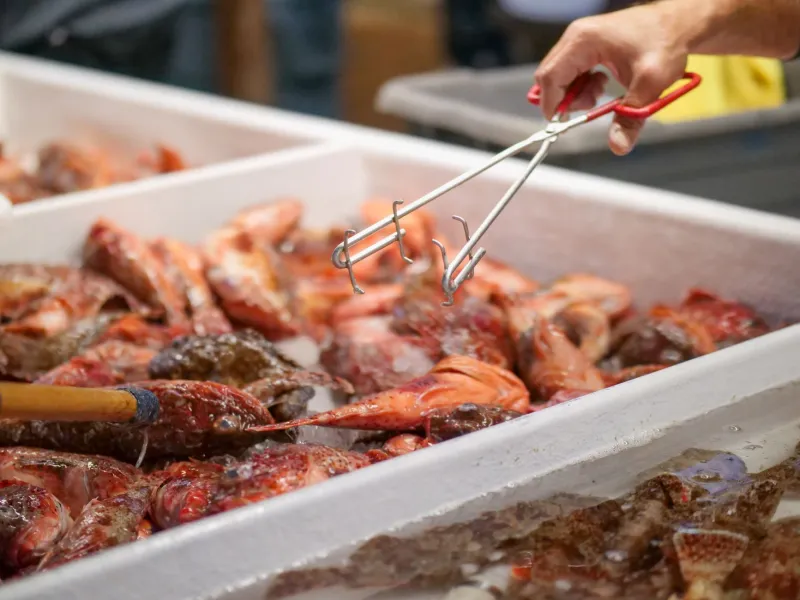
There is a moment that happens in the best Japanese kitchens every morning before a single burner is lit. A chef stands at a counter, turns a fish over in both hands, presses gently near the gills, and makes a decision that no invoice could have predicted. The fish either earns its place on the menu or it does not. Price, in that moment, is largely irrelevant.
This is not theater. It is the product of something far more difficult to acquire than a culinary degree or a generous food budget: a deeply personal, years-long relationship between a professional cook and the people who supply the raw materials of their craft.
The Supplier as Partner, Not Vendor
In Japan, the distinction between a vendor and a trusted purveyor is not subtle — it is foundational. The Japanese concept of ningenkankei, or human relationships built on mutual respect and reciprocity, extends naturally into professional life, including the kitchen. A fishmonger who has supplied the same chef for fifteen years is not simply a business contact. He is a collaborator, an advisor, and in many cases, a friend whose judgment the chef trusts as much as his own.
This dynamic produces something remarkable: the supplier begins to anticipate the chef's needs before they are articulated. When an exceptional haul arrives at the docks at four in the morning, the fishmonger's first phone call goes not to the highest bidder, but to the chef who has shown up consistently, paid fairly, and treated the relationship with dignity. Access to the finest ingredients, in this framework, is a social achievement as much as a financial one.
For American diners accustomed to menus built around what the wholesale distributor delivered that week, this philosophy represents a meaningful departure. It places human judgment — and human connection — at the center of culinary decision-making.
Reading What Cannot Be Listed on a Label
Japanese chefs develop what might be described as a sensory vocabulary for quality. They learn to read an ingredient the way a skilled reader interprets a page: quickly, accurately, and with nuance that comes only from long practice. The sheen of a fish's eye. The resistance of flesh when pressed. The particular brightness of citrus rind after a cold night. The way a root vegetable holds its color in the hand.
None of these signals appear on a price tag. Most of them cannot be photographed adequately or described in a product listing. They must be experienced directly, repeatedly, and in conversation with someone who has been observing the same signals for decades longer than you have.
This is precisely why the fishmonger's intuition matters so much. A skilled purveyor does not simply sell what arrived; they curate what is worth your attention on a given day. When a Japanese chef defers to that expertise — asking the fishmonger what is exceptional this morning rather than ordering from a fixed list — they are not abdicating their professional authority. They are exercising it through the intelligent use of trusted counsel.
Seasonality as the Starting Point, Not the Constraint
In Japan's culinary tradition, the calendar is not a limitation. It is a guide. The concept of shun — the peak moment of an ingredient's flavor and availability — shapes menus at every level of the dining culture, from humble neighborhood restaurants to multi-course kaiseki establishments.
Chefs who have internalized this principle do not fight the season. They do not insist on tomatoes in February or asparagus in October. Instead, they allow what is genuinely excellent right now to dictate what they cook. The result is not a restricted menu. It is a more honest one — and, almost without exception, a more delicious one.
For American home cooks, this represents one of the most accessible applications of Japanese culinary philosophy. You do not need a Michelin-starred kitchen or a Tokyo fish market to begin cooking with seasonal intention. You need a farmers market habit, a willingness to ask your local vendor what is at its best this week, and the discipline to let the answer shape your dinner.
Building the American Version of This Relationship
The good news for cooks and small restaurant owners in the United States is that this philosophy travels. The infrastructure may look different — a Saturday farmers market rather than a predawn wholesale auction, a local butcher rather than a centuries-old family fishmonger — but the underlying principles translate with surprising fidelity.
Begin by introducing yourself honestly. Tell your local fishmonger, butcher, or produce vendor what you are trying to accomplish in your kitchen. Ask what they are proud of this week. Return consistently. Pay fairly and promptly. Show genuine curiosity about their work and their sourcing. Over time, this behavior signals that you are a serious buyer who values quality over convenience, and suppliers respond to that signal in kind.
The chefs who receive the first call when something exceptional arrives are not necessarily the ones with the largest orders. They are the ones who have made themselves worth calling — who have demonstrated, through repeated interaction, that they will appreciate and properly honor what they receive.
What This Means at the Table
At Tamaniwa Ebisu, the philosophy described here is not an abstract ideal. It is a daily practice. The ingredients that arrive in our kitchen do so because of relationships built carefully over time, with suppliers who understand that what they send us will be treated with the same seriousness with which it was selected. Our menus shift with the season not as a marketing gesture but as a natural consequence of sourcing this way.
When you dine with us, you are tasting the result of those relationships as much as the result of our kitchen's technique. The fish was chosen this morning by someone who knows what exceptional looks like. The vegetables arrived because a grower trusted us to present them well. The sake was selected because a purveyor understood what we were trying to serve alongside it.
This is what it means to cook — and to dine — with intention.
A Different Kind of Expertise
The Japanese chef's intuition is not magic. It is the accumulated result of thousands of mornings spent at markets, thousands of conversations with suppliers, and a cultural framework that prizes relational knowledge as highly as technical skill. It is expertise that lives in the hands and the memory as much as in the mind.
For American cooks willing to slow down, ask better questions, and invest in the human side of ingredient sourcing, this kind of expertise is entirely within reach. It does not require a larger budget. It requires a different orientation — one that places trust, relationship, and sensory honesty at the center of how we feed ourselves and the people we love.